

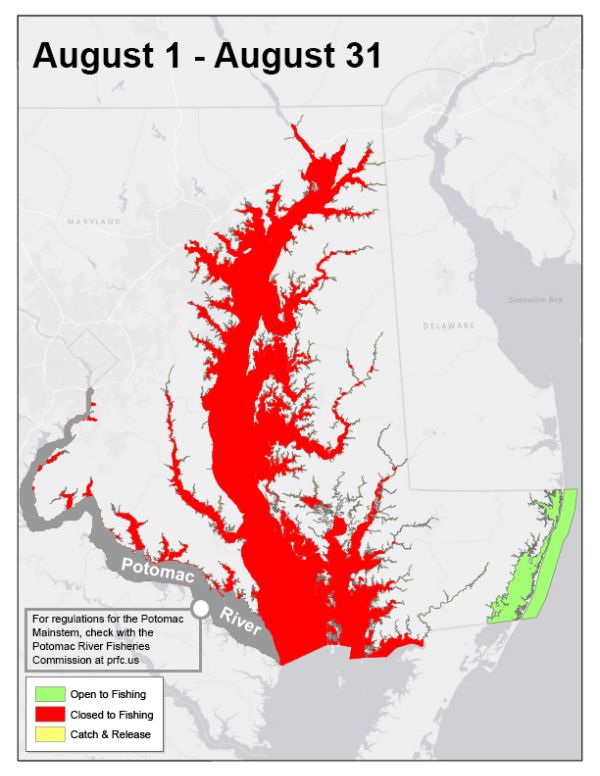
Maryland’s decision to shutter the Chesapeake Bay striped bass fishery for the entire month of August is more than a fisheries-management footnote; it’s a textbook case of how regulatory creep can quietly erode the very traditions that sustain public support for conservation. By forcing anglers off the water during peak summer vacation weeks, the state is effectively converting a once-open public resource into a seasonal privilege that exists only when bureaucrats allow it. The same agencies that claim to champion “sustainable use” are simultaneously steering frustrated sportsmen toward unlimited harvests of invasive catfish and snakeheads—an implicit admission that their top-down species management has created ecological imbalances only private citizens, exercising their own initiative, can correct.
For the 2A community the lesson is immediate and practical: every time a state treats recreational access as a dial it can spin up or down, it normalizes the notion that constitutional rights are also subject to seasonal adjustment. The same logic that closes a bay to protect “vulnerable” stripers can later close a range to protect “vulnerable” sensibilities, or condition permit issuance on the completion of yet another government course. Maryland’s August closure therefore isn’t just about fish; it’s a reminder that the infrastructure of control—biologists with clipboards, GIS overlays, and public-comment charades—can be repurposed against any activity that requires stepping outside one’s front door with the tools of liberty in hand.
The practical takeaway for Chesapeake sportsmen is to treat the closure not as an inconvenience to be waited out, but as a catalyst to diversify their skill sets and political engagement. Sharpening marksmanship on the very invasives the state now encourages, while simultaneously organizing to demand science-based, sunsetted regulations rather than perpetual seasonal bans, keeps both the Second Amendment and the angling tradition from being managed into irrelevance.


