

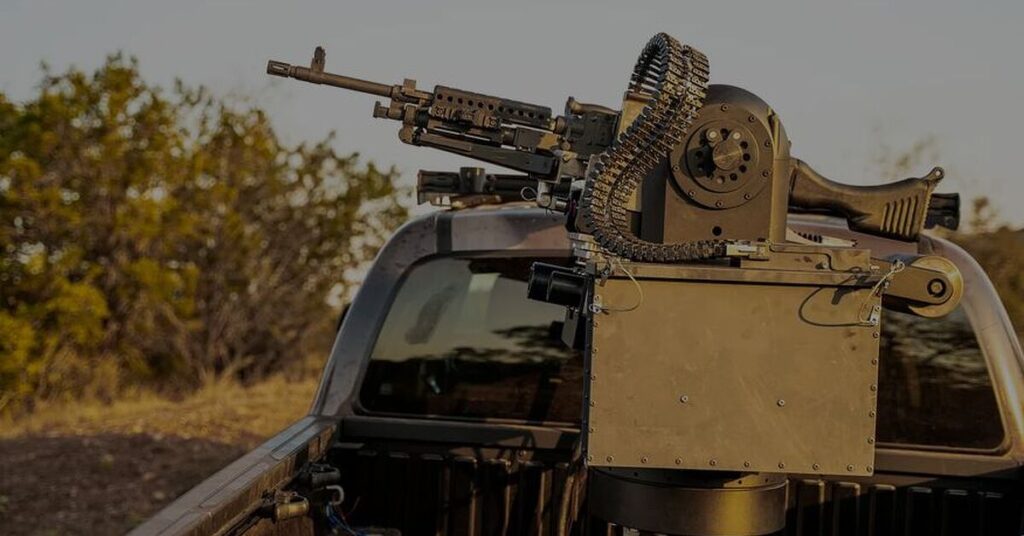
The Marine Corps just turned the drone-defense math on its head by bolting an autonomous M240 machine-gun turret onto a mobile air-defense platform, giving leathernecks a ten-dollar-per-shot kinetic option that can shred incoming quadcopters without touching the six-figure missile inventory. Instead of burning an AIM-9X every time a $500 Shahed-style UAV wanders into the engagement envelope, the system uses radar and electro-optical cueing to lay the M240 on target and let 7.62 mm ballistics do the rest—cheap, plentiful, and devastating against soft-skinned drones. For Second Amendment advocates, the lesson is unmistakable: the same rugged, semi-auto-capable machine guns that civilians can lawfully own are proving their worth on tomorrow’s battlefield, underscoring why magazine bans, feature restrictions, and “assault weapon” rhetoric ignore both history and current combat data.
What makes the pairing especially clever is the layered approach—electronic warfare first, kinetic second—mirroring how private citizens already combine non-lethal tools (lights, lasers, less-lethal munitions) with traditional firearms for home defense. By keeping missiles in reserve for manned aircraft or cruise missiles, the Corps is demonstrating that the right tool at the right price preserves magazines for the threats that actually justify them, a fiscal and tactical discipline the gun-control lobby rarely acknowledges. If anything, the experiment reinforces why the civilian market must retain access to reliable, belt-fed platforms and high-capacity magazines: the same components that let a turret cycle 950 rounds per minute without overheating are the ones that let a prepared citizen maintain continuous fire when seconds count. In short, the Marine Corps is validating on the modern battlefield what 2A supporters have argued for decades—prohibiting the tools that work is a policy choice, not a necessity imposed by physics or safety.


