

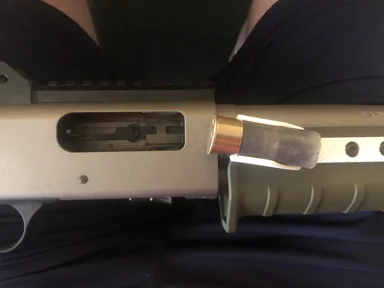
The Magpul SGA fore-end just got a clever little upgrade that feels like the kind of grassroots ingenuity the 2A community has always thrived on. By tilting the shell at a precise 10° angle and parking it 60 mm ahead of the first M-Lok slot, this 3D-printed match-saver turns an otherwise awkward open-breech reload into something that feels almost natural—especially for competition or home-defense setups where every tenth of a second counts. The fact that it prints cleanly in both PLA+ and PETG without supports is a quiet nod to how accessible these tools have become; anyone with a modest printer can now bolt on a feature that used to require custom machining or aftermarket parts that may never arrive.
What stands out is the designer’s willingness to iterate in public. Acknowledging the inertia problem—rounds sliding out under recoil or movement—while promising v1.x fixes shows the open-source ethos that keeps the guncad scene honest and fast-moving. Remix-friendly licensing means the next improvement could come from a high-school kid in Texas or a gunsmith in Montana, not a boardroom in Colorado. That distributed creativity is exactly why the antis keep trying to criminalize files and filament; they understand that once the design is out there, it can’t be put back in the box.
For the broader community this is another data point in the quiet revolution of decentralized manufacturing. Every time someone solves a niche ergonomics problem on their kitchen table and shares the fix, they chip away at the notion that only big manufacturers or government-approved vendors should decide how we configure our firearms. The SGA match-saver may be a small part, but it’s a reminder that the right to keep and bear arms now includes the right to design, print, and improve the tools that make those arms effective.


