

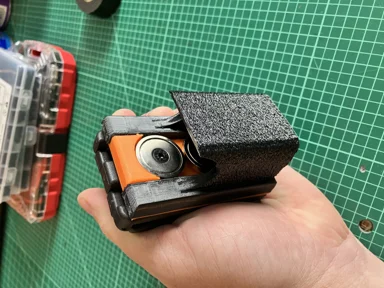
The MagDock V1 represents a clever evolution in the ongoing arms race between gear manufacturers and the practical shooter who refuses to accept that “good enough” is actually good enough. By marrying a Tek-Lok interface with a pair of 60-lb countersunk magnets, the designer has solved the two perennial complaints about magazine carriers: retention that’s either too loose or too tight, and the maddening need for a separate tool every time you want to reposition a pouch on your belt. The fact that the entire assembly prints in two pieces—one TPU body, one PLA backplate—means a shooter can iterate the geometry in an afternoon, swap colors to match kit, or even print a spare body the night before a match without waiting on overseas shipping. That kind of on-demand customization is exactly why the 3-D printing corner of the 2-A community keeps pulling ahead of legacy holster companies that still treat polymer as a cost-cutting afterthought rather than a design material.
What’s quietly radical here is the deliberate engineering concession to real-world draw mechanics. The small gap between the holster body and the Tek-Lok isn’t a flaw; it’s a flex joint that lets the pouch give when a magazine exits at a slight angle, sparing the front retention lip from the micro-fractures that doom rigid Kydex or injection-molded carriers after a few thousand draws. Pair that forgiveness with a silicone wipe-down and you have a pouch that stays slick under stress yet still grabs the magazine when the gun runs dry. For IDPA and USPSA competitors who measure stage times in tenths of seconds, those fractions add up; for the armed citizen who might only draw under duress once in a lifetime, the same design still offers bomb-proof retention without the need for a thumb-break or flap.
Beyond the range, the MagDock quietly democratizes gear innovation. The parts list is three Amazon clicks and a spool of filament—no $400 injection-mold run, no MOQ, no waiting for distributors to decide whether the market is “big enough.” That accessibility is the real multiplier for the Second Amendment: when any shooter with a printer can prototype, test, and share an improvement overnight, the feedback loop between end-user and designer collapses from months to hours. The result isn’t just better magazine pouches; it’s a standing reminder that rights are preserved by communities that treat them as living technologies, not museum pieces.


