

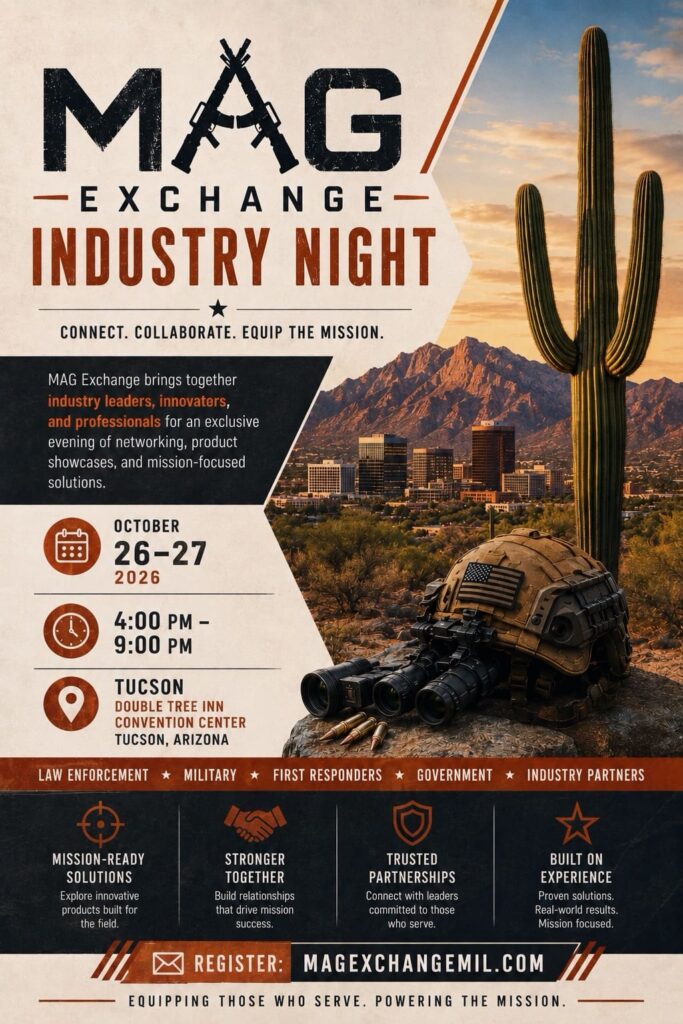
The MAG Exchange is carving out a rarefied space in the defense calendar by running its private evening sessions right alongside the ARC WEPTAC conference, giving industry insiders a chance to move from daytime briefings straight into after-hours deal-making without ever leaving Tucson. In an era when many trade shows have become bloated, badge-heavy spectacles, this two-night, invitation-only format signals a deliberate return to high-signal networking—where the people who actually write requirements, fund programs, and field gear can talk candidly about what works and what doesn’t. For the 2A community, that matters: the same companies refining next-generation small arms, optics, and suppressors for military end-users are often the ones whose civilian-legal variants later reach the commercial market, so the conversations happening in Tucson will quietly shape what’s on dealers’ shelves two or three years from now.
Equally telling is the decision to keep the event lean—October 26-27 only—and to route exhibitor interest through a single point of contact rather than an open registration portal. That scarcity model creates urgency and exclusivity, two commodities that have grown scarce as the firearms industry scales. It also underscores a broader trend: prime contractors and cutting-edge innovators are increasingly looking for controlled environments where they can showcase mission-focused solutions without the distraction of mass-market consumers or the optics of a giant expo floor. The result is a feedback loop that benefits both the warfighter and the lawfully armed citizen; lessons learned under night-vision in the desert translate directly into more rugged, user-centric products that civilians can trust when seconds count.
Ultimately, MAG Exchange is less about another booth-and-badge affair and more about concentrating influence where it can do the most good—behind closed doors, among the people who decide what the next generation of defensive tools will look like. For Second Amendment advocates tracking the health of the domestic manufacturing base, the event’s timing and format are worth watching: the companies that earn a seat at that table are the ones most likely to keep investing in R&D that serves both the military customer and the law-abiding gun owner who demands the same reliability at home.


