

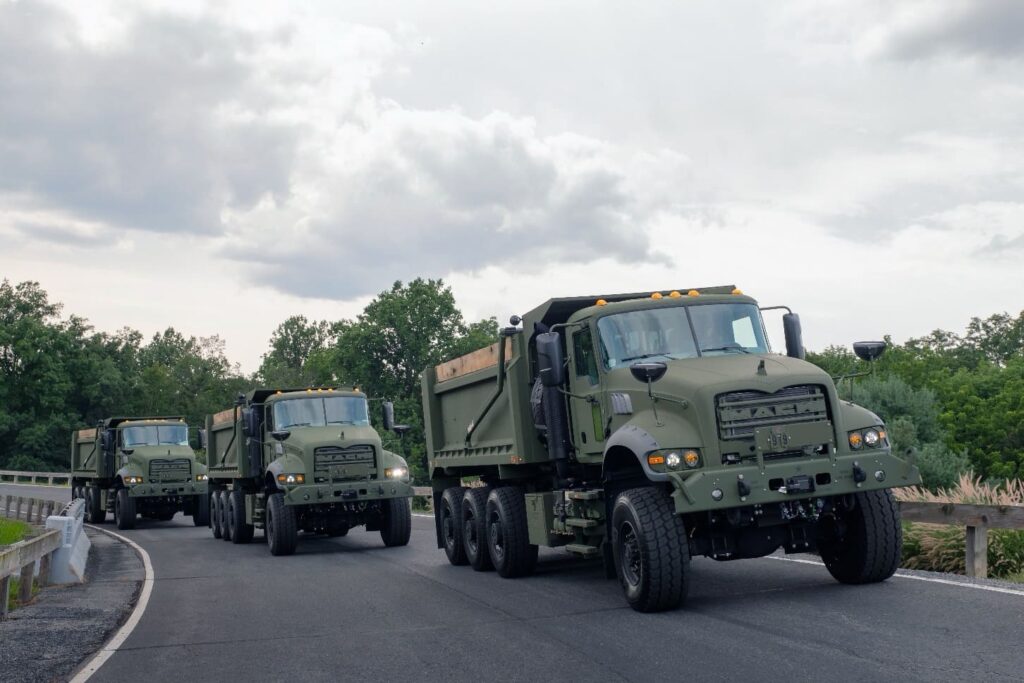
Mack Defense’s fresh order for 115 M917A3 Heavy Dump Trucks is more than a routine logistics win—it’s a reminder that the same industrial muscle that keeps the National Guard’s heavy-haul fleet rolling also underpins the domestic manufacturing base that supplies the civilian firearms market. Every chassis, drivetrain, and axle that rolls out of Allentown strengthens a supply chain whose skilled welders, machinists, and metallurgists are equally at home turning out precision rifle components or high-capacity magazines. When Congress funds these programs, it is indirectly subsidizing the very workforce and tooling that keeps American gunmakers competitive against overseas producers who answer to different masters.
The timing is telling. With the Army and Guard modernizing their engineer fleets, the same congressional committees that green-light these contracts also shape export policy, ITAR rules, and the regulatory climate for small arms. A robust defense-industrial sector gives pro-2A lawmakers tangible leverage: they can argue that protecting domestic firearms production is not merely a cultural preference but a national-security imperative. Conversely, any future administration tempted to throttle civilian rifle or ammunition output would have to weigh the downstream effect on the very factories that keep M917A3s—and their civilian cousins—on the road.
For Second Amendment advocates, the takeaway is straightforward: support for a strong, diversified U.S. industrial base is inseparable from support for the right to keep and bear arms. Whether the topic is 6×6 dump trucks or 6.5 Creedmoor rifles, the same principle applies—capacity that exists for the military today can be redirected to lawful civilian needs tomorrow, provided the political will exists to defend both.


