

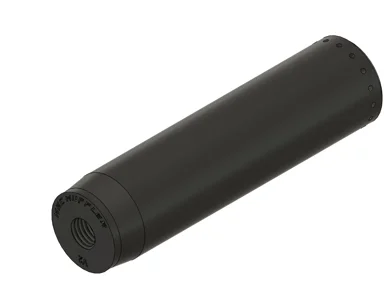
The MAC-11 has long been the poster child for compact, high-rate-of-fire 9mm firepower, but its ear-splitting bark has always been part of the package—until now. This new Form 1–ready “Mac Muffler” threads directly onto the classic 3/4-10 barrel, giving builders an instant path to hearing-safe, backyard-plinking sessions without surrendering the platform’s signature controllability. By offering both stamped-and-turned aluminum kits and turnkey welded units, the designer is effectively democratizing access to a suppressor that was once the exclusive domain of Class 3 dealers and six-month waits.
For the broader Second Amendment community, this is more than a niche accessory; it’s a tangible reminder that the right to keep and bear arms includes the right to protect the very senses required to exercise that right responsibly. Every incremental improvement in suppressor technology—lighter materials, tighter tolerances, faster Form 1 approval pipelines—pushes the Overton window further toward normalizing hearing protection as standard equipment rather than exotic hardware. When a builder can spin up a 9 mm can on a Bridgeport in an afternoon and have it approved before the next range day, the old argument that suppressors are “too hard to get” starts to ring hollow.
Equally important is the cultural signal this project sends: the MAC platform, once maligned in media as a “gangster gun,” is being reclaimed by hobbyists who value precision, safety, and legal compliance. By pairing the Mac Muffler with open-source LBRY tags like “free speech” and “weapons,” the maker is framing the build as an act of expression protected under the First as well as the Second Amendment. That framing matters. It reframes suppressors not as stealth tools for shadowy operators, but as constitutionally protected implements that let citizens train longer, more safely, and more often—exactly the kind of responsible ownership the 2A community has always championed.


