

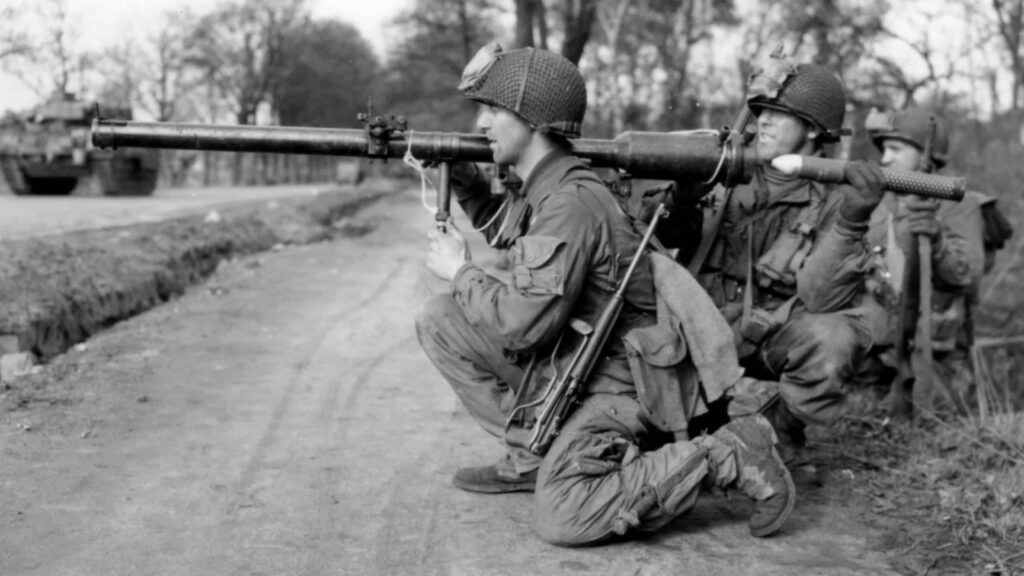
The M18 recoilless rifle represents a fascinating evolution in infantry anti-armor capability, one that echoes the original Carl Gustaf’s revolutionary impact on small-unit tactics during the Cold War. Where the M3A1 Carl Gustaf brought 84mm firepower down to the squad level with manageable weight, the M18 concept appears to push this philosophy further—potentially offering even lighter weight and improved ergonomics while maintaining the devastating effect on light armor, bunkers, and fortified positions that made recoilless rifles indispensable to infantry since World War II. For the 2A community, this development underscores a crucial truth: the same engineering principles that make shoulder-fired anti-tank weapons effective against armored threats are fundamentally identical to those governing civilian-legal firearms, demonstrating that restrictions on military-grade weapons often rest on arbitrary distinctions rather than technical realities.
What’s particularly compelling about this concept is how it challenges the narrative that modern infantry weapons have grown too complex or specialized for individual citizen ownership. The M18’s design philosophy—maximizing portability while delivering decisive firepower—mirrors exactly what millions of American gun owners seek in their personal defense and sporting arms. When government agencies develop weapons that emphasize individual operator effectiveness over crew-served systems, they’re inadvertently validating the 2A argument that citizens can and should possess arms capable of meaningful resistance. The technical innovations likely incorporated in the M18—advanced materials, improved recoil management, enhanced sighting systems—represent the same trajectory of civilian firearms development that has given us increasingly capable defensive carbines and precision rifles.
Perhaps most significantly, the M18’s emergence as a new concept in 2026 highlights how the fundamental right to keep and bear arms encompasses the entire spectrum of small arms development, not merely sporting or defensive applications. As military forces worldwide continue refining man-portable anti-armor systems, the technical knowledge and manufacturing capabilities required become increasingly democratized. This progression reinforces why 2A advocates correctly argue that the right to bear arms isn’t frozen in 1791 technology—it’s an evolving protection that encompasses whatever arms are in common use for lawful purposes, including the same class of weapons that modern infantry relies upon for survival on the battlefield.


