

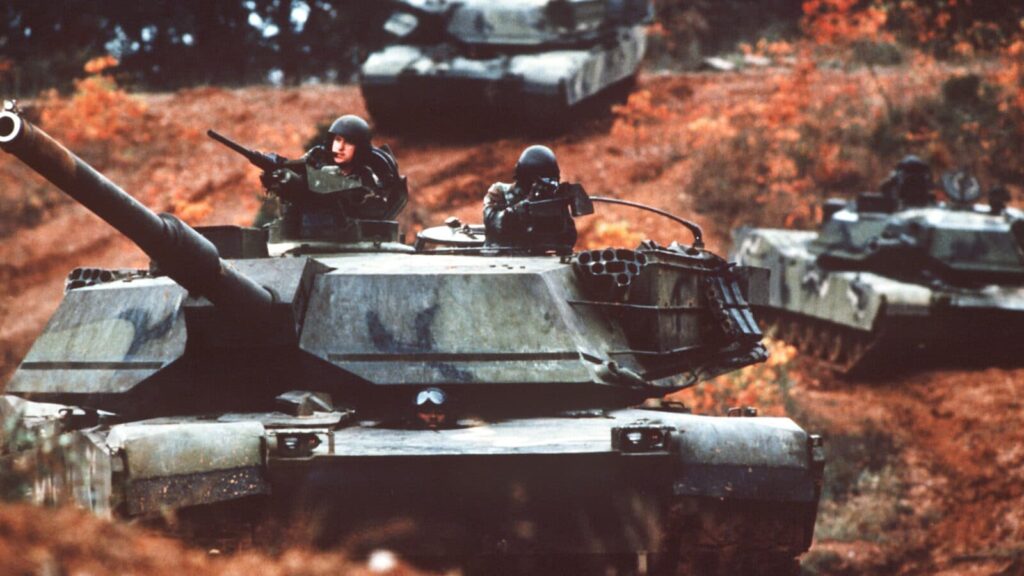
The M1 Abrams isn’t just a tank—it’s a rolling declaration that the Second Amendment’s “well regulated militia” clause still means something when the nation’s survival is on the line. Built around a 120 mm smoothbore cannon that can punch through the frontal armor of any peer adversary, the Abrams pairs raw kinetic power with digital fire-control systems that let a four-man crew engage targets at ranges once reserved for artillery. That same engineering DNA—precision manufacturing, modular armor arrays, and turbine-driven mobility—trickles down into the civilian market as improved metallurgy, optics, and recoil-management tech that shows up in everything from precision rifles to competition shotguns. When the Abrams rolls, it reminds every gun owner that the right to keep and bear arms isn’t limited to deer rifles; it’s part of a continuum that stretches from the individual carbine to the collective armor that deters foreign aggression.
What makes the story of the “best job I ever had” so compelling for the 2A community is the human element: the tank commander who trusts his life to the same constitutional principles that protect his personal firearms at home. The Abrams crew doesn’t just operate hardware; they embody the militia ideal—citizen-soldiers who maintain proficiency with complex systems and stand ready to defend the Republic. That mindset translates directly to the range, the reloading bench, and the voting booth. Every time a new armor package or active-protection system is fielded, it validates the argument that an armed populace, backed by a technologically superior military, is the ultimate guarantor of liberty. The tank may weigh seventy tons, but its message is light and portable: the tools of freedom scale from the individual trigger finger to the main battle tank, and both are worth preserving.


