

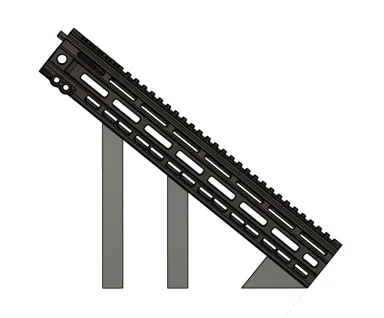
The latest remix of the GEISSELE-style DeAR22 handguard pushes the envelope on what a printed AR-22 platform can achieve, stretching the original 7-inch design into three new lengths—10.1, 11.7, and 13.3—all built around a printed barrel nut. That single engineering choice is the real story: by ditching the need for a metal nut, the designer has removed a critical supply-chain dependency and handed builders a fully printable interface that still locks up tight enough for a precision rimfire. The result is a handguard that can swallow a suppressor, clear an 18-inch barrel, and still feel at home on a lightweight trainer or a budget plinker.
For the 2A community, this matters because it demonstrates how quickly the design space is expanding once the tooling cost drops to the price of filament. A longer free-float tube isn’t just cosmetic; it gives builders more rail estate for optics, lights, and grips without adding the weight or cost of an aftermarket metal part. In states where feature bans or magazine restrictions already push shooters toward rimfire rifles, the ability to print a longer, modular handguard turns a “budget” gun into a legitimate training or competition platform. It also underscores a broader shift: as printable interfaces mature, the line between “accessory” and “controlled part” blurs, forcing regulators to play catch-up with hobbyists who treat CAD files like open-source code.
The deeper implication is cultural. Every new remix lowers the barrier for the next newcomer, turning what used to be gunsmithing into an exercise in iteration. A first-time builder can now drop a 13-inch handguard on a DeAR22, add a printed stock, and walk away with a rifle that looks and handles like a high-end trainer—without ever filing paperwork or visiting a gun store. That capability doesn’t just expand personal freedom; it decentralizes the entire ecosystem, making it harder for any single choke point—regulatory, commercial, or logistical—to dictate who gets to build and how.


