

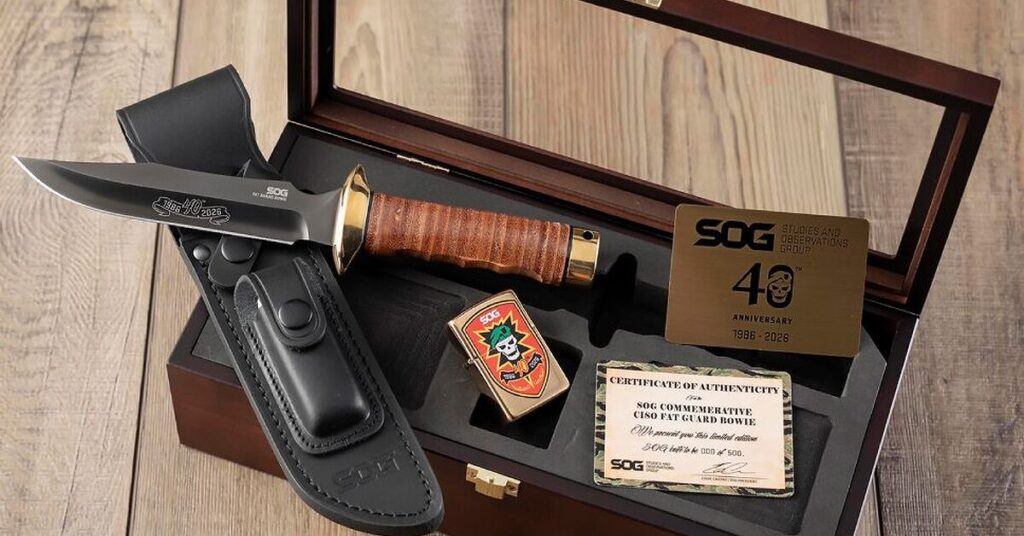
SOG’s decision to cap the Fat Guard Bowie at 500 serialized units isn’t just a marketing flourish—it’s a deliberate nod to the knife’s roots in the same era that birthed the modern American edged-tool renaissance. Forty years ago, SOG’s original Bowie helped shift the conversation from “hunting knife” to “tactical utility blade,” and this anniversary edition keeps that lineage intact while reminding collectors that scarcity still carries weight in a market flooded with mass-produced imports. At roughly $400, the knife sits at the intersection of heritage pricing and investment-grade collectibility, a sweet spot that rewards buyers who value documented provenance over the latest titanium flipper fad.
For the 2A community, the release underscores a larger truth: knives remain the most accessible expression of the right to keep and bear arms, unencumbered by the regulatory patchwork that increasingly shadows firearms ownership. A limited-run Bowie doesn’t require background checks, magazine restrictions, or feature bans; it simply exists as an unapologetic tool of personal defense and frontier heritage. That autonomy is precisely why commemorative runs like this resonate—each serialized handle becomes both a functional cutter and a quiet affirmation that self-reliance tools deserve the same respect traditionally reserved for firearms.
Beyond the spec sheet, the Fat Guard’s re-release signals that domestic manufacturers are doubling down on American-made exclusivity at a moment when supply-chain fragility and overseas quality control issues are top of mind. For enthusiasts who already juggle serialized lowers, C&R handguns, and Class-III items, adding a low-three-digit Bowie to the safe is less about another blade and more about curating a complete inventory of constitutionally protected implements. In short, SOG isn’t merely selling a knife; it’s offering tangible proof that the 2A ecosystem still prizes craftsmanship, scarcity, and the freedom to choose what rides on your belt.


