

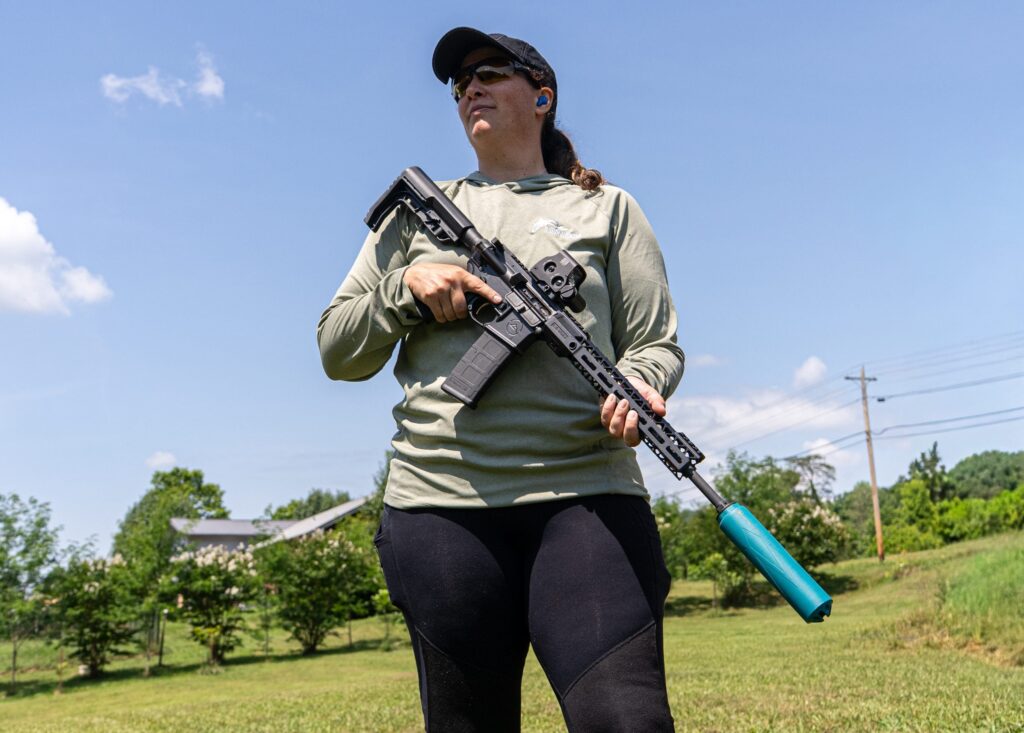
The ROAM R-15’s magnesium chassis and Whisperchicks suppressor pairing isn’t just another “lightweight AR” story—it’s a deliberate engineering answer to the real-world barriers that keep many women from spending serious time behind the gun. By shaving pounds without sacrificing durability, the platform removes the physical fatigue that turns a range session into an endurance test, while the integral suppression keeps recoil and blast low enough that new shooters can focus on fundamentals instead of flinching. That combination matters because the fastest-growing segment of first-time gun owners is female; when the gear stops fighting the shooter, the learning curve flattens and confidence compounds.
For the broader 2A community this matters beyond marketing. Every new shooter who walks away from the range thinking “I can do this again tomorrow” is another voter, another range member, another potential instructor. The ROAM build demonstrates that manufacturers who prioritize ergonomics and sound-signature reduction aren’t just chasing niche sales—they’re expanding the coalition that defends the right to keep and bear arms. When the next magazine ban or pistol-brace rule surfaces, the people who actually enjoy shooting are the ones who show up to testify and donate; lighter, quieter rifles accelerate that pipeline.
The larger implication is cultural. Firearms training has historically been framed around “man-sized” loads and loud, unsuppressed rifles that reward upper-body strength. Shifting the default toward manageable, hearing-safe platforms reframes the narrative from “can you handle it?” to “how quickly can you get competent?” That reframing doesn’t dilute the Second Amendment; it multiplies the number of citizens who feel ownership over it.


