

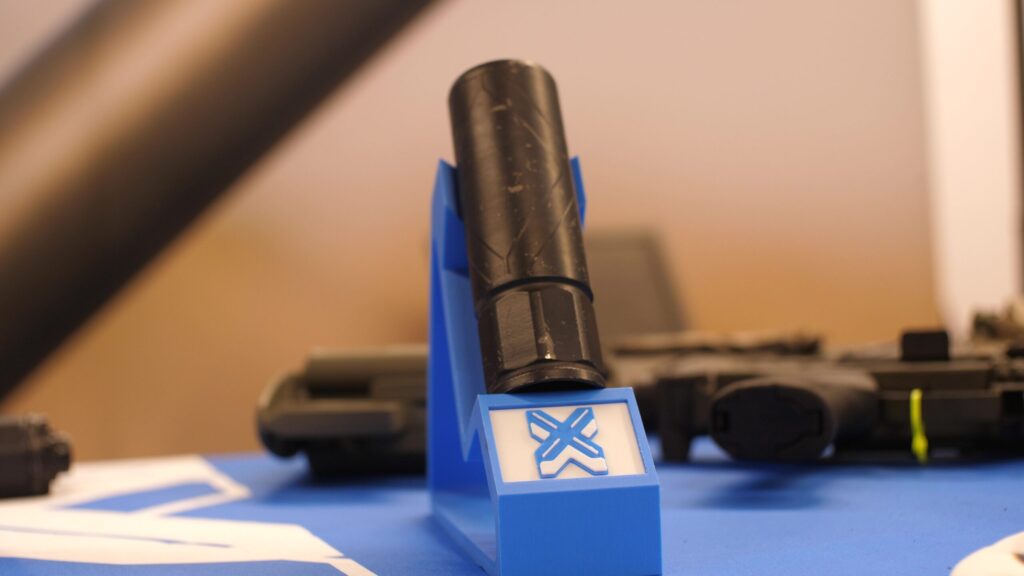
The LayerX Suppression Strake 9K isn’t just another can slapped on the end of a barrel—it’s a statement that the suppressor market has finally caught up to what serious shooters have been demanding for years: real-world durability without the usual trade-offs in weight or sound reduction. Built around a hybrid Inconel-titanium matrix and a flow-through baffle geometry that LayerX claims cuts back-pressure by nearly 40 percent, the 9K is being positioned as the first production suppressor that can live on a hard-use 300 BLK SBR and still deliver sub-120 dB performance at the shooter’s ear. That matters because the old calculus—sacrifice either hearing protection or reliability—has kept a lot of otherwise law-abiding owners from running suppressed platforms in defensive or competition roles.
For the 2A community the bigger story isn’t the decibel rating; it’s the regulatory and cultural signal. GunCon 2026’s decision to give the 9K a headline slot tells us the industry now treats suppressors as mainstream safety equipment rather than exotic accessories, and that shift is already showing up in statehouses where shall-issue suppressor permit bills are moving with surprising speed. If the 9K’s price point lands where early leaks suggest—under $900 after the tax stamp—expect a measurable uptick in first-time Form 4 filings from owners who previously viewed suppression as too expensive or too finicky. That volume matters: every new suppressor owner is another data point legislators can’t ignore when anti-gun voices try to paint these devices as “silencers for assassins.”
The real test will come once civilian end-users start logging round counts in the tens of thousands. If LayerX’s erosion numbers hold up under sustained full-auto strings and the unit stays under 13 ounces, the 9K could accelerate the normalization of suppressed carry the same way red-dots did a decade ago—turning an “optional upgrade” into standard equipment for anyone who values both hearing preservation and neighbor-friendly training. That trajectory strengthens the argument that suppressors are a net public-safety good, not a loophole, and keeps the constitutional conversation focused on rights rather than restrictions.


