

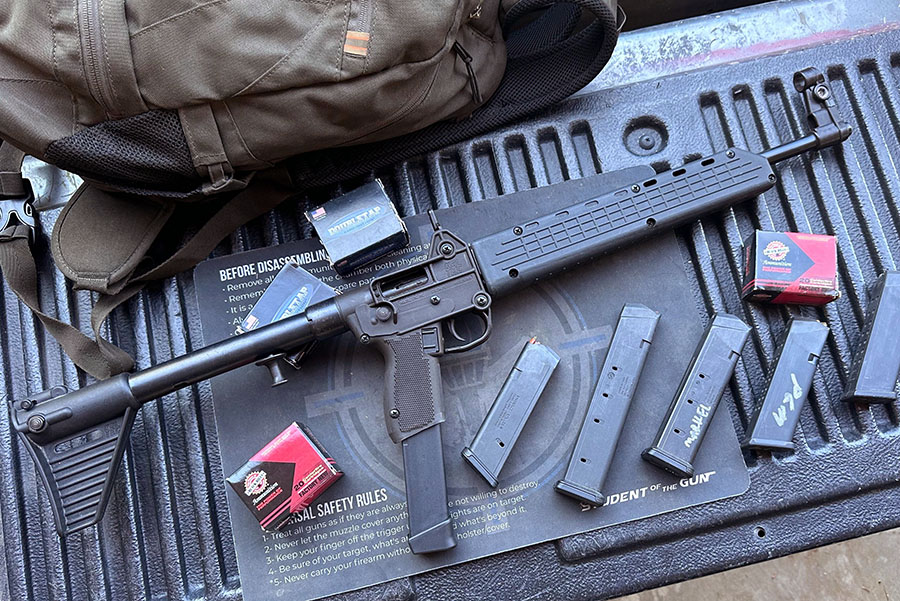
When Kellgren rolled out the SUB2000 in 2001, he wasn’t just selling another carbine—he was quietly solving a problem most shooters didn’t even know they had yet: how to keep a rifle-length platform handy without advertising it. In an era when “folding carbine” still sounded like something out of a Cold-War armory catalog, the SUB2000’s ability to collapse into a shape that fit inside a day-pack or under a car seat felt almost subversive. It turned the everyday carry question on its head: instead of asking whether you could justify a rifle, it asked why you shouldn’t have one available the moment you needed it.
That design choice still ripples through the 2A community today. The SUB2000 proved that compactness and legality could coexist without forcing shooters to surrender power or accuracy, and it quietly normalized the idea that a defensive firearm doesn’t have to live in a safe or a gun room. In states where feature bans and magazine restrictions keep multiplying, the platform’s aftermarket support—especially optics rails and last-round bolt holds—shows how civilian ingenuity keeps pace with creeping regulation. More importantly, it planted the seed for an entire category of “truck guns” and “get-home” rifles that treat portability as a civil-rights feature rather than a tactical gimmick.
Fast-forward two decades and the SUB2000’s DNA is visible in everything from modern folding ARs to braced pistols that legislators suddenly decided needed extra rules. Its legacy isn’t just mechanical; it’s cultural. By making a full-power carbine disappear into a backpack, Kellgren reminded the community that the Second Amendment isn’t only about what you can own—it’s about how creatively you can keep it ready when seconds count and official protection is miles away.


