

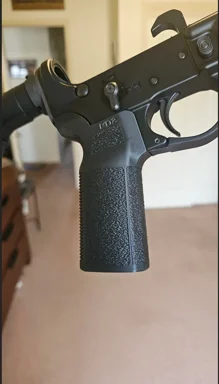
The KD2 Grip modification represents a fascinating evolution in the 3D-printed firearm accessory space, where community-driven iteration meets practical field testing. What started as Kabor Devices’ original design has been refined through real-world user feedback—the kind of grassroots development that traditional manufacturers simply can’t replicate at this speed. The shift from horizontal strips to fuzzy skin stippling on the front, combined with targeted stippling where the thumb rests, addresses a fundamental physics problem: rotational torque. Those original strips created excellent vertical purchase but essentially turned the grip into a smooth cylinder when lateral forces were applied, allowing the weapon to twist during rapid manipulation or under stress.
This kind of micro-optimization speaks to something deeper happening in the 2A community—the democratization of design refinement that puts end-users in direct conversation with creators. Rather than waiting for Magpul or another major manufacturer to address grip texture issues through expensive R&D cycles, shooters are solving their own problems and sharing solutions within days. The material recommendations (ASA, PETG, nylon over PLA+) reflect hard-won knowledge about polymer behavior under real conditions, not theoretical specifications. When someone notes that PLA+ will melt in the warmer months, they’re speaking from experience with equipment that’s been left in vehicles or used in training environments where ambient temperatures matter.
The implications extend beyond individual grip improvements to the broader ecosystem of decentralized firearm innovation. Each shared modification becomes part of a living design database that evolves faster than any corporate product roadmap. This isn’t just about better stippling patterns—it’s about proving that the 3D printing community can iterate on safety-critical components with the kind of speed and specificity that traditional supply chains can’t match. The fact that this modification exists at all suggests we’re moving toward a future where firearm accessories aren’t just mass-produced commodities but customizable platforms that adapt to individual shooting styles, hand sizes, and operational requirements.


