

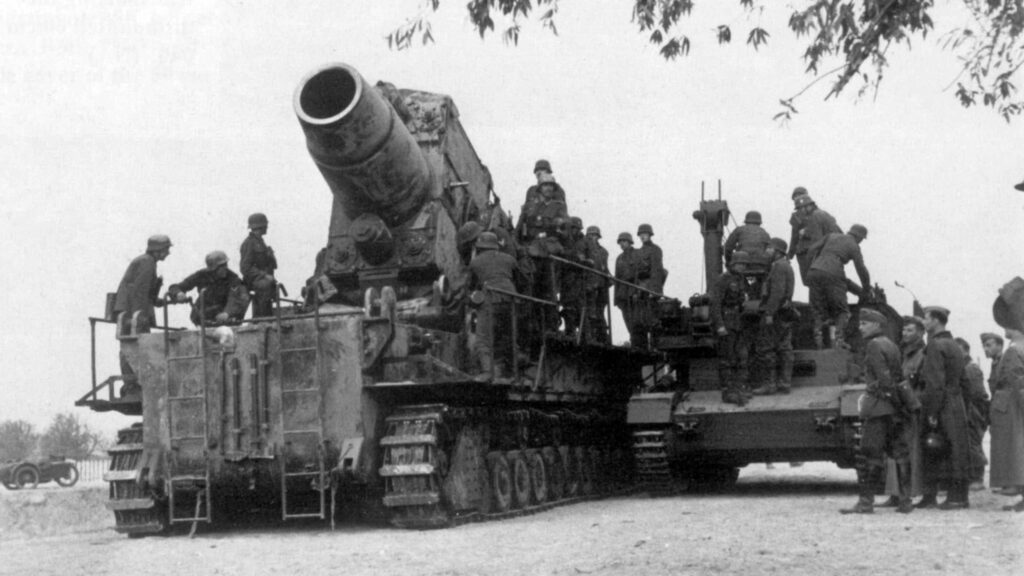
When the Wehrmacht rolled the 124-ton Karl-Gerät self-propelled mortar onto the battlefield in 1941, it wasn’t merely fielding another siege piece; it was demonstrating what happens when a nation decides that firepower must be mobile, protected, and decisive. The 60 cm howitzer could lob a 2.2-ton shell more than six miles, yet the real engineering marvel was the tracked chassis that let crews reposition the monster between shots without dismantling the gun. That marriage of heavy ordnance and tracked mobility foreshadowed the post-war realization that artillery, like small arms, gains its greatest utility when the citizen—or the soldier—can bring it to bear quickly and keep it in action under fire.
For the 2A community the Karl-Gerät is less a cautionary tale about “weapons of war” than a reminder that rights and technology travel together. Just as the mortar’s carriage turned an otherwise static siege gun into a maneuver element, the modern right to keep and bear arms is strengthened every time a new platform—semi-auto rifles, braced pistols, or now braced short-barreled rifles—lets an individual retain parity with emerging threats. History shows that once a capability proves decisive on the battlefield, governments rarely surrender it; the same logic that made the tracked mortar indispensable in 1941 makes the AR-15 platform indispensable to an armed citizenry today.
The deeper lesson is that arms control debates are almost always arguments about mobility and access, not raw destructive power. Karl-Gerät’s designers accepted that a gun too heavy to move is a gun already lost; likewise, any regulatory regime that prices, weighs, or licenses common arms out of practical reach effectively repeals the Second Amendment without ever touching the text. The German monster on tracks therefore stands as both engineering achievement and quiet warning: the right to arms is only as robust as the tools that make that right usable in the moment it is needed.


