

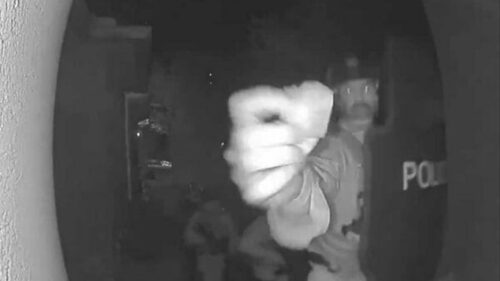
A federal judge’s refusal to dismiss most of Maer Malinowski’s claims against the ATF is more than a procedural win—it’s a rare judicial spotlight on the agency’s increasingly aggressive tactics against lawful gun owners. Bryan Malinowski, a licensed dealer with no criminal record, was killed in his own home during a no-knock-style raid over what the government framed as “unlicensed sales,” yet the court’s decision signals that the facts may not support the ATF’s narrative of necessity or restraint. For the 2A community, this case underscores a troubling pattern: federal agents treating paperwork disputes as justification for lethal force, then expecting courts to rubber-stamp qualified immunity.
The broader implication is that accountability is finally creeping into ATF operations that have long operated with minimal oversight. When a judge allows claims of excessive force and constitutional violations to proceed, it sends a message that “administrative violations” cannot automatically justify predawn raids on citizens who pose no imminent threat. This ruling could embolden other families and attorneys to challenge similar operations, potentially chilling the agency’s appetite for high-risk warrants over regulatory technicalities rather than violent crime.
For gun owners, the Malinowski case is a stark reminder that the Second Amendment’s protections are only as strong as the Fourth and Fifth Amendments that shield us from government overreach. If the ATF can treat a licensed dealer’s alleged licensing lapse as probable cause for lethal action, then every FFL holder—and every gun owner—operates under an unspoken threat that minor disputes could escalate into tragedy. The 2A community should watch this litigation closely; a favorable outcome won’t just deliver justice for the Malinowski family, it could force the agency to recalibrate its enforcement culture before more blood is shed over paperwork.


