

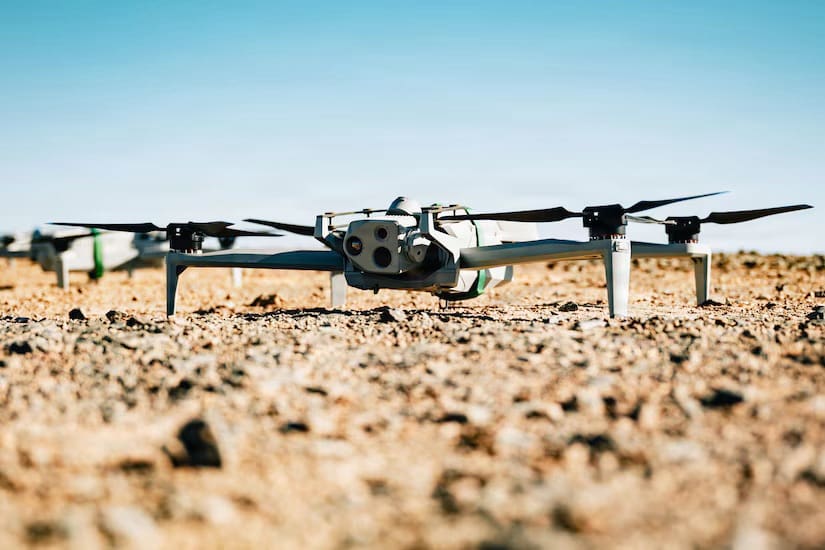
The release of Joint Interagency Task Force 401’s handbook on countering small drones is a timely reminder that the same technologies now being weaponized by cartels, terrorists, and rogue states are also the ones most likely to be turned against law-abiding gun owners in the name of “public safety.” The guide’s emphasis on first-principles thinking—understanding how drones move, communicate, and evade detection—highlights how quickly the threat landscape has shifted from hobbyist quadcopters to autonomous swarms capable of delivering payloads or conducting persistent surveillance. For the 2A community this matters because every new counter-drone tool, sensor fusion network, or regulatory carve-out created for “national security” can be repurposed by agencies already eager to monitor ranges, training events, and private property under expanded definitions of “critical infrastructure.”
What the handbook does not say out loud is that the same legal and technical architecture being built to interdict illicit drones will inevitably collide with the constitutional right to keep and bear arms when those drones are used for lawful purposes such as property defense, livestock monitoring, or competitive shooting sports. Once federal, state, and local entities normalize the idea that certain classes of unmanned aircraft must be jammed, spoofed, or kinetically defeated, the precedent is set for restricting or banning civilian ownership of similar platforms—especially those that could be paired with legal firearms for home or ranch security. The 2A community should therefore treat this publication not as a distant military-academic exercise, but as an early warning that the regulatory and technological battlefield is expanding into the low-altitude airspace directly above our homes, ranges, and training facilities.


