

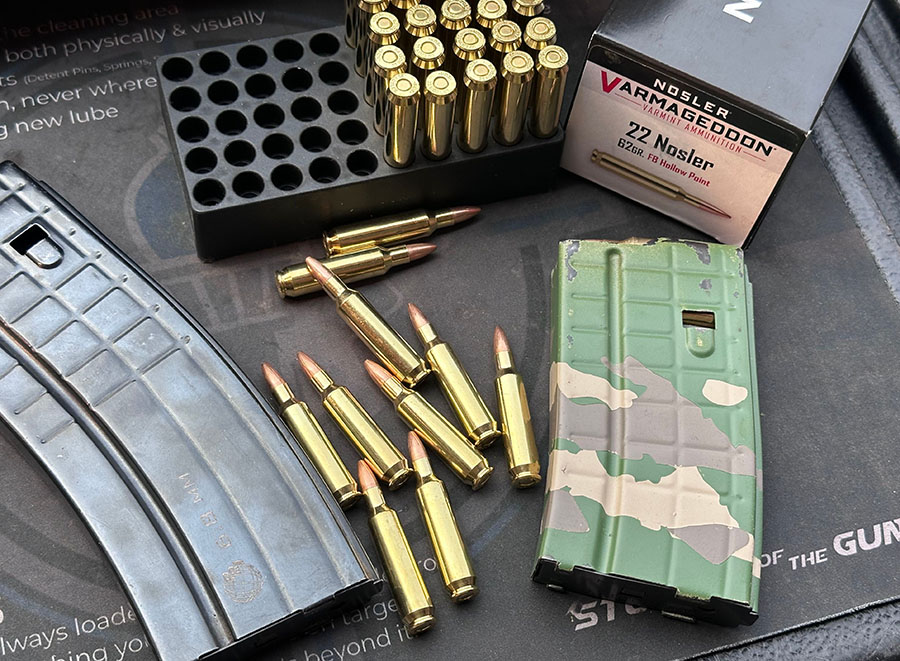
The 22 Nosler didn’t spring from a marketing brainstorm; it was forged in the same crucible that produced the 6.8 SPC II during the Global War on Terror, when soldiers demanded a cartridge that could reach farther and hit harder than 5.556 NATO without forcing a wholesale change in rifles. By necking the proven SPC case down to .224, Nosler essentially created a “.223 on steroids” that delivers 77-grain bullets at velocities once reserved for magnum-class rounds, all while fitting in standard AR-15 magazines and actions. That lineage matters because it shows how battlefield necessity can trickle down into civilian innovation, turning a military stop-gap into a precision varmint and medium-game round that punches well above its bore size.
For the 2A community the real story isn’t just ballistics; it’s the reminder that cartridge evolution is driven by end-users who refuse to accept the status quo. When the military flirted with 6.8 SPC and then largely abandoned it, private industry picked up the pieces and refined them into something legal, affordable, and wildly effective for American shooters. That pattern—government experiments leaking into civilian hands—has repeated with 300 BLK, 6.5 Grendel, and now 22 Nosler, proving that the right to keep and bear arms includes the right to improve upon them. In an era of proposed magazine bans and “assault weapon” restrictions, these wildcat-to-factory success stories underscore why protecting component parts and ammunition innovation is every bit as vital as safeguarding the rifles themselves.


