

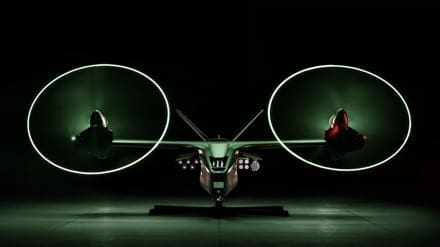
The Thunder concept arrives at a moment when the battlefield has been turned inside out by cheap, attritable systems that can loiter for hours and strike without warning. Where attack helicopters once owned the nap-of-the-earth fight, they now face a sky thick with small UAS, persistent ISR, and man-portable missiles that cost a fraction of a Hellfire. The Thunder’s pitch—autonomous, low-signature, and designed to operate inside the very envelope that used to be the helicopter’s sanctuary—signals a shift from crewed platforms that must be protected to expendable ones that can be risked. For the 2A community this is more than a tactical footnote; it underscores how quickly the tools of maneuver are migrating from the hands of the individual warfighter to centralized, software-defined systems that may one day decide who gets armed and who does not.
That migration carries a quiet warning for civilian rights. Every new layer of autonomy layered onto lethal platforms normalizes the idea that machines, not citizens, should hold the ultimate authority over force. If the same logic that produced the Thunder—centralized command, algorithmic targeting, and reduced human oversight—ever leaks into domestic policing or regulatory regimes, the Second Amendment’s core guarantee of an armed populace could be reframed as an anachronism. The rotorcraft itself may never fly over U.S. soil, but the precedent it sets for who owns the sky, who programs the rules of engagement, and who is allowed to remain in the loop will shape the legal and cultural battles over personal arms for decades.
At the same time, the Thunder’s very existence is a reminder that technology is not destiny; it is a contest. Just as private citizens once adopted repeating rifles and semiautomatic pistols faster than governments could regulate them, today’s open-source drone builders, decentralized networks, and commercial autonomy stacks are already outpacing state programs in speed and creativity. The 2A community’s task is to ensure that the same diffusion of power that once democratized the rifle now democratizes the tools of aerial surveillance and defense. If autonomy can be pushed down to the individual or small-team level—rather than locked inside billion-dollar programs—the Thunder’s successors may ultimately reinforce, rather than erode, the armed citizen’s place in the defense of a free society.


