

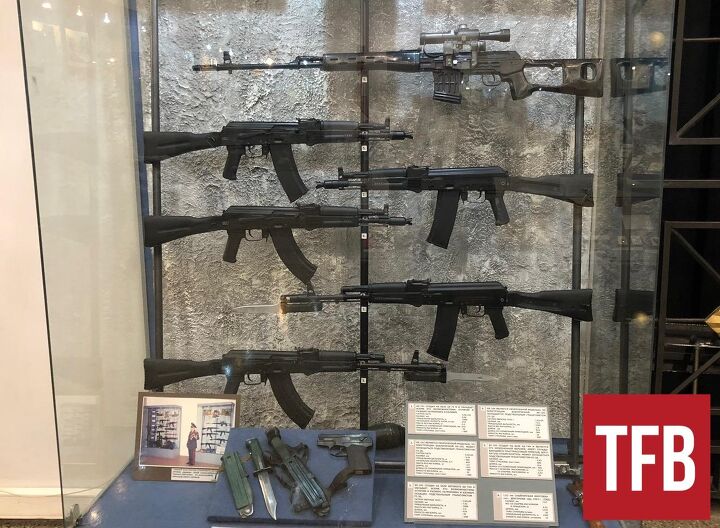
The AK-100 series was developed during one of the hardest periods in modern Russian history, in the years after the Soviet Union collapsed and the country was dealing with a deep economic crisis. In that environment in the early 1990s, Izhmash made the ambitious decision to create a new family of rifles that would modernize the legendary Kalashnikov platform while preserving its battle-proven DNA. What emerged was far more than a simple upgrade; it was a masterclass in evolutionary firearms design born from necessity, national pride, and the harsh realities of post-Soviet industrial survival. While the West was riding the wave of polymer-framed wonder-nines and early precision rifles, Russian engineers doubled down on rugged simplicity with improved materials, side-folding polymer stocks, and enhanced ergonomics that maintained the AK’s legendary reliability even in arctic cold or desert sand.
The AK-101 through AK-105 represented a deliberate philosophical counterpunch to NATO standardization. Chambered primarily in 5.45x39mm (with the AK-103 retaining the battle-tested 7.62x39mm), these rifles incorporated black polymer furniture, muzzle devices that significantly reduced flash and recoil, and rails that, while primitive by today’s standards, showed the Russians understood where the future of accessories was headed. The AK-103 in particular became the true successor to the AKM, maintaining the hard-hitting 7.62 round that many fighters still prefer for its terminal performance through light cover and vegetation. For American enthusiasts, these rifles represent something special: tangible proof that even in economic collapse, the Kalashnikov design continued to evolve rather than stagnate, challenging the narrative that only Western engineering drives innovation.
For the 2A community, the AK-100 series carries important lessons about resilience and design philosophy that transcend politics. While American shooters often chase the latest gadget-heavy platforms, the AK-100 story reminds us that enduring freedom requires weapons that can be produced under duress, maintained with minimal tools, and trusted when supply chains collapse. These rifles, born in crisis, eventually found their way onto the American market in various forms, becoming both collectible pieces of history and practical tools that reinforce the fundamental truth behind the Second Amendment: reliable, effective arms should remain in the hands of citizens, not just governments. In an era of increasing regulatory pressure and technological complexity, the AK-100 series stands as a testament to the idea that sometimes the most profound innovations come from perfecting what already works rather than chasing novelty for its own sake.


