

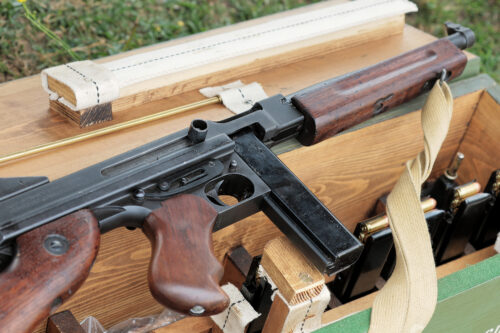
The FBI’s FOIA response finally confirms what many suspected: the “Tommy Gun” Merrick Garland proudly displayed in his office was never a live firearm at all, but a $268.16 replica. That revelation is less about the gun itself and more about the optics of a sitting Attorney General showcasing a prop version of one of the most iconic—and heavily regulated—firearms in American history. The 21-page document answers the narrow question of authenticity, yet it leaves the more interesting ones untouched: who paid for the replica, how it was transported into DOJ headquarters, and why the nation’s top law-enforcement official thought a non-functional Thompson was an appropriate conversation piece in the first place.
For the 2A community, the episode is a microcosm of the broader disconnect between federal firearms policy and everyday gun culture. Garland’s office can brandish a replica Thompson while the same administration pushes pistol-brace rules, frames brace-equipped pistols as machine guns, and litigates to keep suppressors on the NFA registry. The replica’s presence signals that even symbolic firearms are acceptable when they serve a narrative; real ones, however, remain subject to ever-tightening restrictions. Meanwhile, the FOIA’s silence on logistics—how a package containing what appeared to be a submachine gun cleared security at DOJ—highlights the uneven application of the very laws the department enforces. If an ordinary citizen shipped an airsoft Thompson to Washington, the encounter with federal agents would likely be far less cordial.
The larger takeaway is that symbolism matters in the gun-control debate. When the Attorney General’s décor includes a stand-in for a weapon the administration treats as inherently dangerous, it underscores how policy is often driven by perception rather than consistent principle. The 2A community should treat this episode as a reminder: every replica, every prop, every photo-op is another data point in the ongoing argument over who gets to own what, and under what conditions. Until FOIA responses start answering the harder questions—who authorized the replica, who paid for it, and why it was deemed appropriate—the Garland-Tommy-Gun story will remain an unfinished chapter in the larger struggle over the right to keep and bear arms.


