

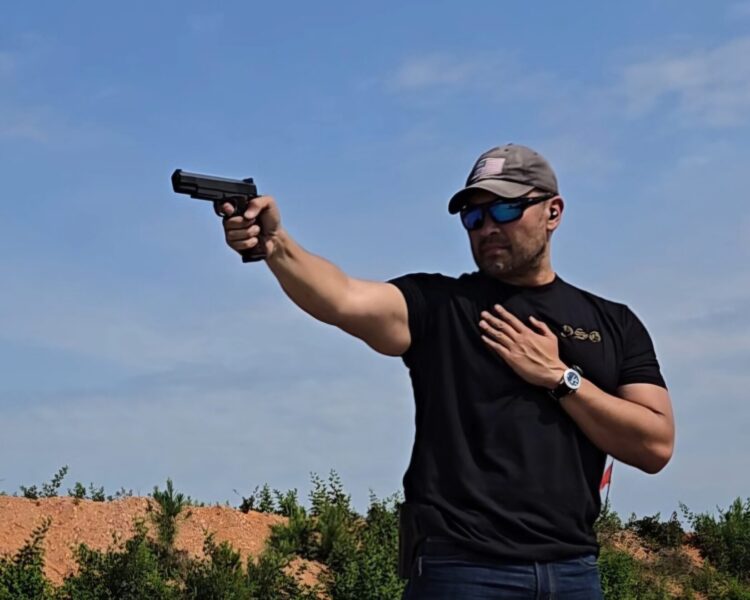
Shooting one-handed with your strong side isn’t just a parlor trick—it’s a foundational survival skill that every gun owner should treat as non-negotiable. When your support hand is occupied holding a light, opening a door, or keeping a loved one behind you, the ability to deliver accurate fire without that extra anchor can mean the difference between stopping a threat and becoming one. The drills highlighted in the source aren’t abstract range games; they’re deliberate stress inoculators that force the shooter to confront grip pressure, trigger control, and sight alignment under conditions that mimic real-world chaos. For the 2A community, this kind of training quietly reinforces the argument that armed citizens aren’t just “hobbyists” but people who take the responsibility of self-defense seriously enough to master the fundamentals even when the textbook two-handed stance isn’t available.
Beyond personal proficiency, one-hand proficiency sends a broader cultural message. Anti-gun narratives often paint lawful carriers as reckless or untrained; demonstrating that we routinely practice degraded-position shooting undercuts that caricature and shows a community committed to continuous improvement rather than complacency. It also dovetails with legal realities—many defensive shootings occur in confined spaces or while moving, where the luxury of a perfect isosceles stance evaporates in seconds. By curating and sharing these skill builders, instructors and range operators aren’t just helping individuals; they’re building a collective body of evidence that armed Americans prioritize competence. In an era when every range session can be scrutinized, that competence is both a tactical edge and a political asset.


