

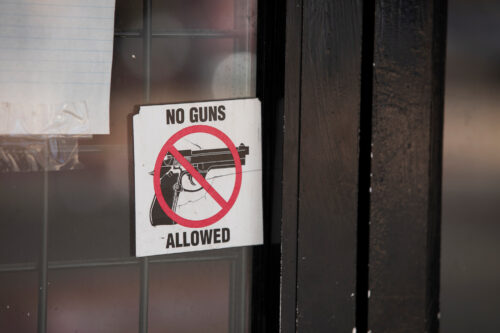
A federal judge’s decision to treat licensed foster and daycare homes as “sensitive places” where the Second Amendment can be curtailed is a textbook example of how courts are stretching the Supreme Court’s “sensitive places” language far beyond its historical moorings. The ruling essentially converts thousands of ordinary private residences into gun-free zones by administrative fiat, simply because the state has issued a license to care for children there. That sleight-of-hand turns the Bruen test on its head: instead of asking whether the Second Amendment’s plain text covers conduct and whether a historical analogue exists, the court lets modern regulatory labels do the work that actual tradition never did.
For the 2A community the practical fallout is immediate. Law-abiding foster parents who lawfully carry for self-defense now face an impossible choice—surrender their right to bear arms inside their own homes or risk losing the children they have opened those homes to serve. The same logic could migrate to any residence that touches a government program, from in-home health aides to Section 8 landlords, effectively allowing states to gerrymander constitutional rights by regulatory classification. If “child present” is enough to nullify the right to keep and bear arms, then the right exists only on paper in any household with minors—an outcome the Founders would have found constitutionally unrecognizable.
The deeper danger lies in the precedent itself. By blessing the state’s power to designate whole categories of private property as “sensitive” without historical support, the decision invites an ever-expanding map of no-carry zones drawn by bureaucratic whim rather than constitutional text. The 2A community should treat this not as an isolated Illinois curiosity but as a live-fire demonstration of how incremental redefinitions of “sensitive places” can quietly disarm law-abiding citizens one regulatory label at a time.


