

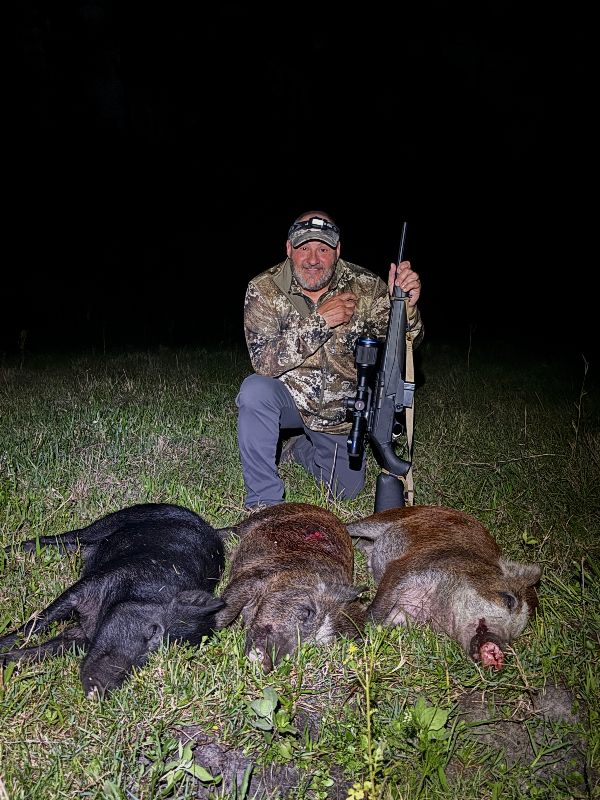
The Cianciarulo family’s decision to run Browning BARs paired with Pulsar thermals across Florida’s 26th season isn’t just another hog-hunt story—it’s a textbook demonstration of how modern semi-auto platforms and thermal optics turn nocturnal feral-swine pressure into a sustainable management tool. Where traditional daytime spot-and-stalk tactics often fail against sounder movement after dark, the BAR’s quick-handling .308/7-62 NATO chambering and Pulsar’s sub-30 mK NETD sensitivity let the family engage moving targets at 150-plus yards without artificial light that could spook the rest of the herd. That combination quietly underscores why the right to own both a reliable semi-automatic sporting rifle and civilian-legal thermal devices matters: it multiplies one hunter’s effectiveness without requiring additional manpower or daylight hours that many working families simply don’t have.
Beyond the hardware, the Cianciarulos illustrate a broader cultural shift inside the 2A community—families treating regulated hunting as both recreation and civic service. Florida’s year-round hog seasons exist precisely because unchecked populations destroy crops, wetlands, and native species; every pig taken after sundown is one less animal compounding those costs. By documenting their success with mainstream, factory-supported gear rather than exotic custom builds, the family sends a clear signal that constitutional carry of practical firearms and optics isn’t reserved for competition shooters or tactical hobbyists—it’s accessible to any law-abiding citizen willing to invest in training and equipment that also serves the public interest.
The takeaway for Second Amendment advocates is straightforward: when anti-hunting or anti-thermal lobbies push restrictions on semi-autos or night-vision devices, they’re not just trimming “loopholes,” they’re eroding tools that states themselves rely on to control invasive species. Stories like the Cianciarulos’ keep that practical utility front and center, reminding legislators and the public that the same rifles and optics used for putting pork in the freezer are the same ones keeping agricultural losses and environmental damage in check across the Southeast.


