

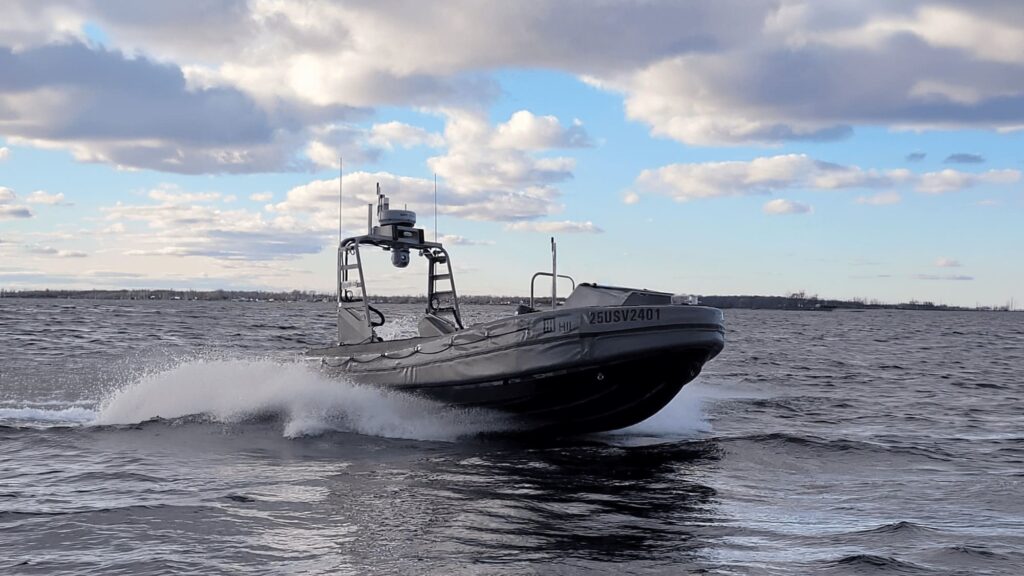
The Defense Innovation Unit’s formal acceptance of HII’s ROMULUS-25-based Watcher sUSV isn’t just another Navy press release—it’s a signal that the same autonomy stack that can pilot a 25-foot patrol boat through contested littorals is now considered “production-ready.” That matters to the 2A community because the underlying perception algorithms, collision-avoidance logic, and low-cost sensor fusion were all developed under the same dual-use umbrella that keeps civilian drone and robotics markets alive. When the Pentagon stamps “cheap and reliable,” the price curve for similar systems drops for everyone else, from ranchers who need autonomous perimeter boats to private maritime-security firms that want an armed overwatch option without a multi-million-dollar hull.
Equally important is the political subtext: DIU’s nod effectively endorses a private-sector solution over the traditional, gold-plated acquisition route. That accelerates fielding timelines and, by extension, keeps the industrial base competitive—something the 2A world learned the hard way during the brace-rule and pistol-brace saga when boutique manufacturers were the only ones nimble enough to respond. If autonomy can be iterated in months instead of decades, the same agility could protect rights-expanding technologies like smart guns, biometric rifle locks, or AI-assisted decision aids from being strangled by slow-moving regulators.
Finally, the ROMULUS program quietly normalizes the idea that unmanned systems can be lethal by default. The hull is weapon-agnostic; once you can steer it, you can mount whatever the mission requires. That precedent will shape future arguments over whether American citizens should have access to comparable defensive autonomy on their own property or vessels. In short, the DIU’s rubber stamp isn’t merely about a robot boat—it’s about who gets to decide how fast, and how affordably, the next generation of armed autonomy reaches the private sector.


