

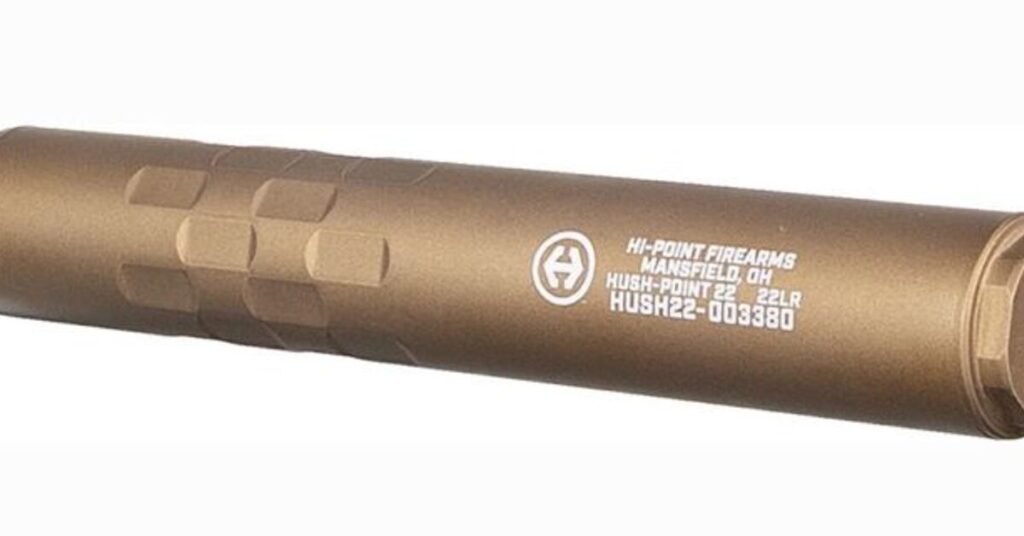
Hi-Point’s decision to drop a burnt-bronze Cerakote version of its Hush-Point 22 through Davidson’s isn’t just a cosmetic refresh—it’s a calculated move that turns an already budget-friendly rimfire can into a statement piece. The Hush-Point 22 has long been the gateway suppressor for new shooters who want to explore the NFA world without dropping four figures on a precision titanium tube, and the limited-run bronze finish gives that same entry point a little swagger. In an era when mainstream manufacturers are still rationing suppressor inventory, Davidson’s exclusive distribution model keeps the product flowing to local FFLs instead of funneling everything through a handful of big-box sites, which matters when rural gun shops are still the backbone of the 2A economy.
More broadly, the release underscores how rimfire suppression is quietly reshaping public perception of silencers. A .22 can that costs less than many optics lets first-time buyers experience hearing-safe plinking on the spot, lowering the intimidation factor that has historically kept casual shooters away from NFA items. When that can shows up in a color that pops on social media instead of basic black, it becomes both a functional tool and a conversation starter—exactly the kind of organic marketing the industry needs while antis continue to push the myth that suppressors are “assassins’ tools.” By keeping the price accessible and the finish distinctive, Hi-Point and Davidson’s are effectively normalizing ownership one backyard range session at a time.
The deeper implication is that smaller manufacturers are learning to weaponize aesthetics and distribution partnerships the same way larger brands have for years. A burnt-bronze Hush-Point won’t outsell a SureFire, but it doesn’t have to; it simply needs to keep the pipeline of new suppressor owners open at the entry level. Every new stamp holder who starts with a $200-ish .22 can is one more voter, one more range buddy, and one more potential upgrade customer down the road. In a political climate where magazine bans and “assault weapon” restrictions dominate headlines, these quiet, incremental wins in the rimfire corner of the market may prove more durable than any single high-profile court victory.


