

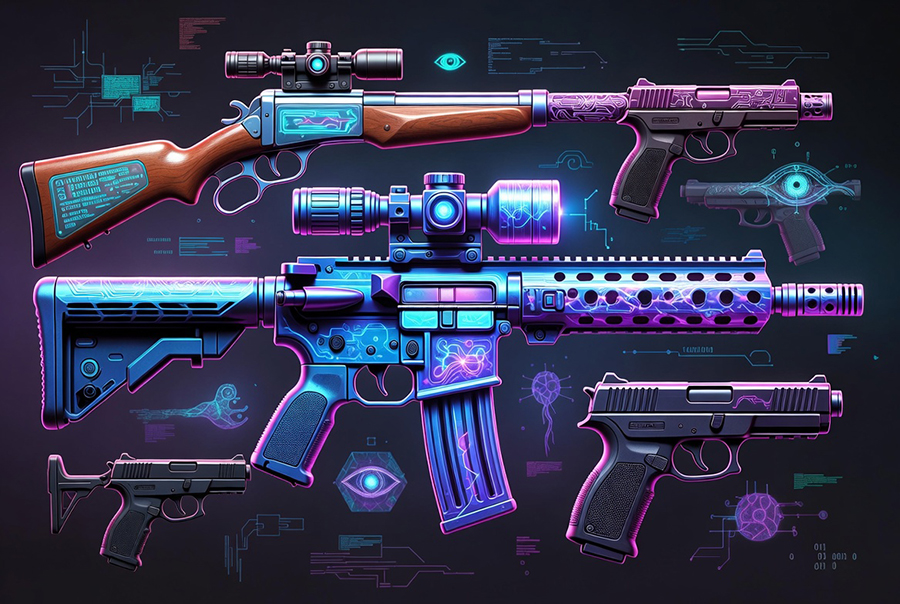
The notion that guns offer a survival blueprint for the AI age isn’t just provocative—it’s a direct extension of the Second Amendment’s core logic: dangerous tools belong in the hands of the people, not monopolized by distant authorities. Just as the Founders understood that an armed citizenry could check tyranny when muskets were the cutting edge, today’s decentralized firearms culture demonstrates how individuals can responsibly steward lethal technology without waiting for permission slips from Silicon Valley or Washington. The 2A community has spent generations refining the balance between access and accountability—background checks, training mandates, safe-storage norms—proving that liberty and prudence can coexist even when the stakes involve life and death.
That same template now collides with generative AI, where the “bad things” (deepfakes, autonomous weapons, algorithmic bias) are already being framed as reasons for centralized control. Firearm owners recognize the pattern: every new capability is first portrayed as too dangerous for civilians, then quietly absorbed by state and corporate actors who promise to wield it benevolently. The 2A response has always been to reject that premise outright, insisting that diffusion of power—millions of armed citizens rather than a single standing army—remains the only durable safeguard. Extending that principle to code and compute means open-source models, local inference, and community norms around responsible use, not top-down kill switches administered by the same institutions historically hostile to an armed populace.
For gun owners, the implication is strategic as well as philosophical: the skills honed defending the right to keep and bear arms—legislative vigilance, cultural messaging, technological literacy—are now portable to the AI frontier. Groups already fluent in arguing that an AR-15 in civilian hands deters crime more effectively than relying solely on police response times can make the parallel case that an open-source LLM on a home server is safer than one locked inside a handful of data centers. The frontier may be digital, but the operating system for surviving it was written in 1791: trust the people, distribute the power, and let individual responsibility, not bureaucratic gatekeeping, manage the risks.


