

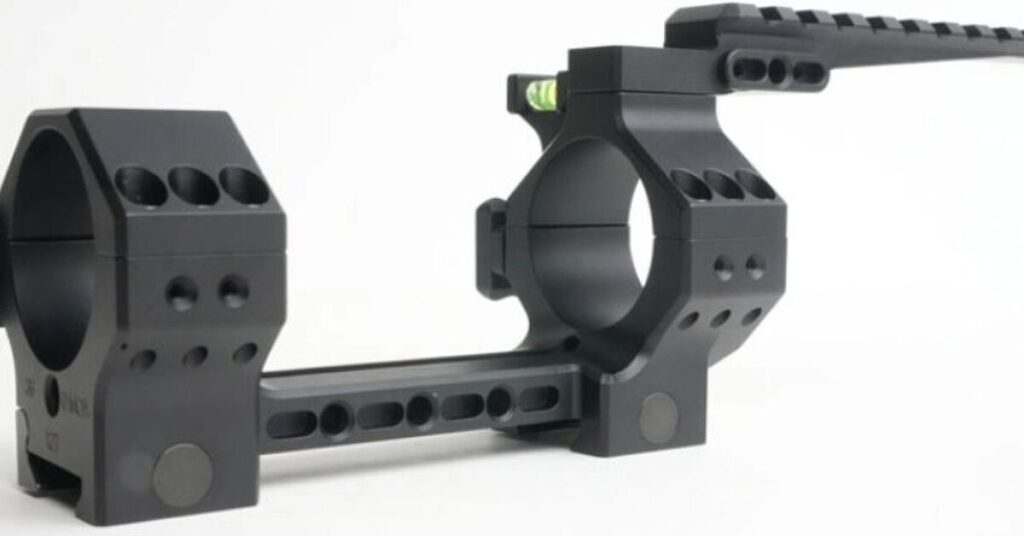
Hawkins Precision’s new TM mount is a quiet but meaningful evolution in how precision shooters interface with their optics. By shortening the footprint compared to traditional one-piece cantilevers, the TM sidesteps the usual trade-offs that arise when a shooter wants to run a full-length rail on a Remage or other split-rail action. That matters because rail real estate is often the hidden constraint in custom builds; a mount that can straddle both full and interrupted rails without forcing the optic forward or backward preserves eye relief and keeps the reticle centered in its mechanical sweet spot. The cross-bolt lock-up adds another layer of repeatability, while the bubble level tucked into the top cap lets the shooter confirm zero cant without lifting their cheek or breaking the sight picture—an incremental but real advantage when every tenth of a mil counts at distance.
For the 2A community, this kind of incremental refinement is more than just another accessory; it’s evidence that the precision-rifle segment continues to reward ingenuity even as regulatory pressure on complete rifles grows. When manufacturers focus on modular, platform-agnostic components, they give individual builders the tools to maintain capability across changing legal landscapes and across different host firearms. A mount that works equally well on a factory chassis or a custom Remage action lowers the barrier to keeping a rifle “legal but lethal” in states that impose restrictions on overall configuration. In that sense, Hawkins isn’t just selling hardware; it’s selling optionality—the ability to reconfigure without sacrificing performance.
The deeper implication is cultural. As the precision community matures, shooters are increasingly valuing adaptability over one-size-fits-all solutions. The TM’s design language—compact, level-integrated, cross-bolt secure—reflects a user base that moves between competition, hunting, and defensive roles and needs gear that travels with them. By solving a narrow but persistent pain point, Hawkins reinforces the broader truth that Second Amendment rights are exercised through the sum of small, practical choices: choosing a mount that fits the rail you actually have, confirming level without breaking position, and keeping the optic exactly where you left it after a hard stage or a long hike. Those choices compound into a resilient, self-reliant shooting culture that no single regulation can easily disarm.


