

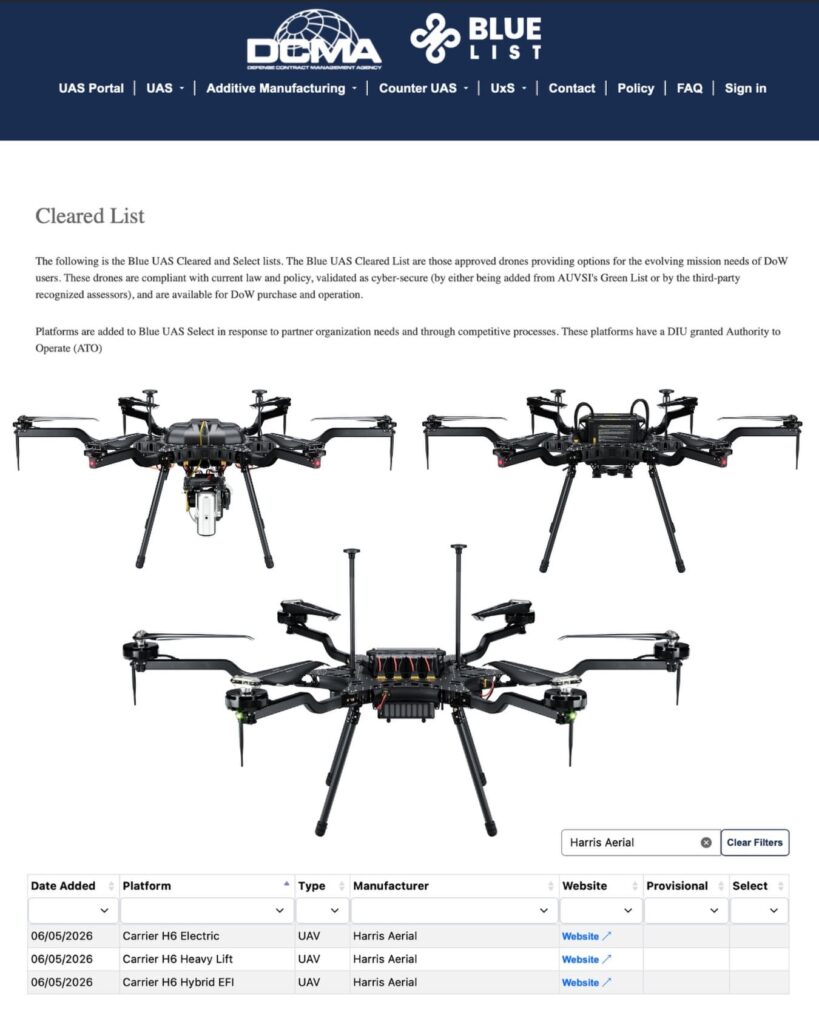
Harris Aerial’s addition to the Blue UAS Cleared List is more than a bureaucratic checkbox—it’s a quiet but unmistakable signal that the same supply-chain scrutiny now applied to drones is coming for every other category of gear the federal government touches. By proving full NDAA compliance, iron-clad cybersecurity, and domestic manufacturing in Orlando, the company has essentially handed lawmakers and procurement officers a ready-made template: American-made, tamper-resistant, and cleared for sensitive missions. For the 2A community that has spent the last decade watching serial-number registries, “smart-gun” mandates, and import bans creep forward under the banner of national security, the lesson is obvious—once the infrastructure for trusted hardware exists, it becomes politically effortless to declare everything else untrusted.
The platforms themselves—Carrier H6 Hybrid EFI, Carrier H6 Electric, and the heavy-lift variant—underscore another trend: the same propulsion and avionics technologies that let these drones haul serious payloads for utilities and forestry are dual-use by nature. A motor and flight controller cleared for defense work can just as easily end up in law-enforcement surveillance packages or, down the road, in systems pitched for “public-safety” roles that historically expand into crowd monitoring and protest policing. The 2A takeaway is that domestic manufacturing and cleared status are rapidly becoming the price of admission not only for government contracts but also for any private-sector operator who wants to avoid future airspace or data restrictions. Companies that cannot or will not meet those bars will find themselves edged out of insurance markets, municipal permits, and ultimately the skies themselves.
In short, Harris Aerial’s milestone is a preview of the broader ecosystem being built around trusted, American-made autonomous systems. Firearm owners who treat drone policy as someone else’s problem are ignoring an early-warning system: the same compliance architecture now locking down unmanned aircraft will be pitched, with only minor re-labeling, as the solution to “ghost guns,” imported receivers, and any other hardware the administrative state decides needs vetting. The companies that survive will be the ones that can stamp “Made in USA, NDAA compliant” on their products; everyone else will be left explaining why their gear shouldn’t be grounded.


