

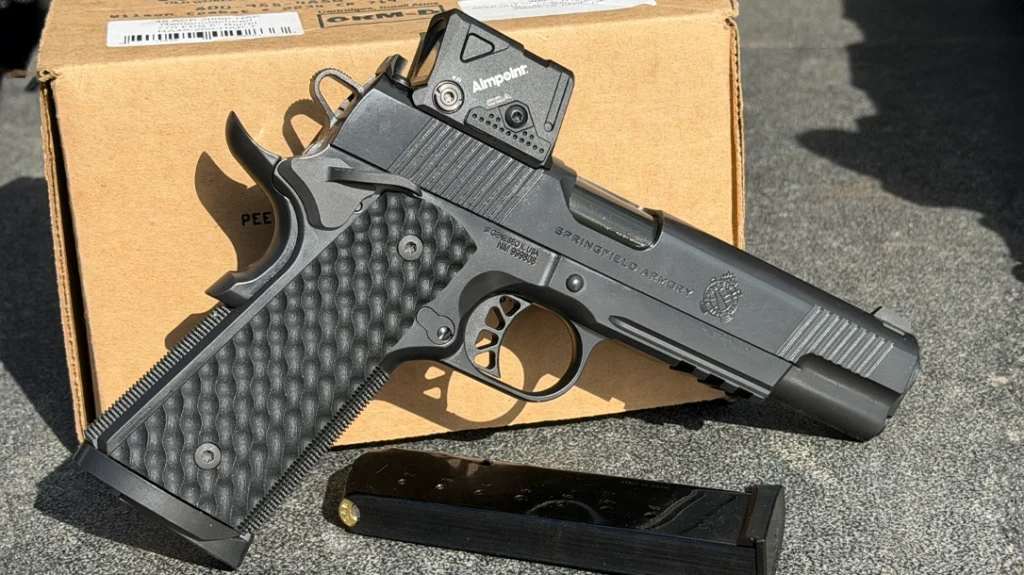
The Springfield TRP COA lands at a moment when the 1911 platform is enjoying a quiet renaissance among shooters who want duty-grade reliability without surrendering the single-action trigger that first made the cartridge famous. By marrying the proven TRP frame—already spec’d for FBI HRT use—with an integrated optic cut and a DeltaPoint Pro footprint, Springfield has effectively answered the question of whether a classic Government-size pistol can play in the modern red-dot world without aftermarket surgery or reliability trade-offs. Early hands-on reports suggest the slide-to-frame fit remains tight, the trigger breaks cleanly around four pounds, and the taller suppressor-height irons co-witness cleanly should the dot ever go down, a detail that matters when the gun is expected to serve both competition and defensive roles.
For the 2A community this release is more than a product drop; it’s a signal that legacy American manufacturers are listening to the same end-users who have spent the last decade retrofitting optics onto older 1911s and then wondering why the slide stop pin walks or the extractor loses tension. By delivering a factory-supported, optics-ready TRP, Springfield lowers the barrier for new shooters who might otherwise default to striker-fired pistols simply because they ship with plates and taller sights. That, in turn, keeps the 1911’s single-action manual-of-arms and .45 ACP terminal-ballistics argument alive in an era when polymer pistols dominate the rental-counter conversation.
Equally important is the optics-cut geometry itself: the COA cut sits low enough that many common micro-dots retain a full sight picture without riser plates, preserving the slim profile that makes the 1911 easy to conceal under a light cover garment. If the aftermarket follows its usual pattern, expect suppressor threads, extended mag catches, and custom grip panels to appear within months—further evidence that an optics-ready 1911 from a major maker accelerates rather than replaces the customization culture that has long defined the platform. In short, the TRP COA isn’t just catching up to the red-dot revolution; it’s positioning the 1911 to remain a relevant choice for those who value shootability, shoot-again reliability, and the enduring legal and cultural arguments that keep the Second Amendment in the daily carry conversation.


