

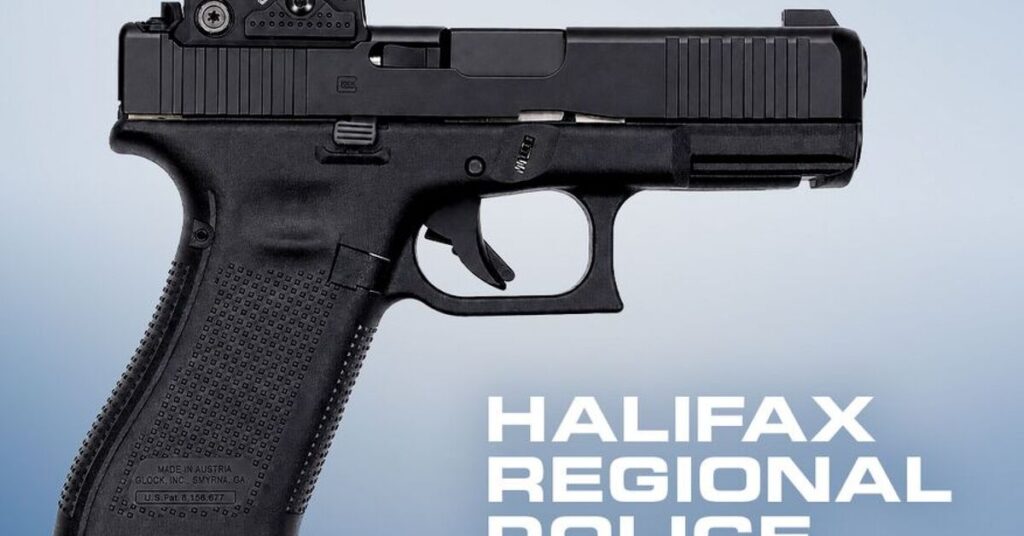
Halifax Regional Police’s move to standardize on the GLOCK G45 COA with its factory A-CUT optic interface is more than a procurement footnote; it’s a quiet endorsement of the idea that duty-grade pistols should ship ready for modern sighting systems rather than requiring aftermarket surgery. By pairing the Gen 5 MOS frame with Aimpoint’s low-mount COA and a Streamlight TLR-7 X, HRP is signaling that red-dot speed and weapon-light utility are now baseline expectations for Canadian street officers, not niche upgrades. That choice ripples south: when a major Atlantic agency validates the same platform American civilians already train with, it undercuts the tired narrative that optics-ready pistols are somehow “too tactical” for lawful carry.
The broader Canadian context adds weight. Rampart’s claim that GLOCKs already serve more than 90 percent of the country’s municipal, provincial, and federal agencies shows how thoroughly the platform has displaced legacy double-actions north of the border, even under Canada’s restrictive firearms regime. For U.S. 2A advocates, the takeaway is straightforward—when police agencies on both sides of the 49th parallel converge on the same striker-fired, optics-ready pistol, it becomes harder for anti-gun voices to portray civilian ownership of comparable hardware as extreme. The G45 COA’s adoption by HRP therefore functions as quiet market validation: the same ergonomics, holster ecosystem, and training ecosystem that keep Canadian officers alive are the ones American carriers rely on every day.
Finally, the inclusion of dedicated G45T training pistols alongside the duty guns underscores a cultural shift toward treating optics and lights as integral rather than optional. Agencies that invest in identical training replicas reduce the skills gap between the range and the street, a lesson that carries directly to civilian instructors running red-dot classes. In short, Halifax’s choice is another data point that the duty pistol of the 2020s is striker-fired, optics-mounted, and light-bearing—and that the 2A community’s preference for the same configuration is simply keeping pace with professional standards rather than racing ahead of them.


