

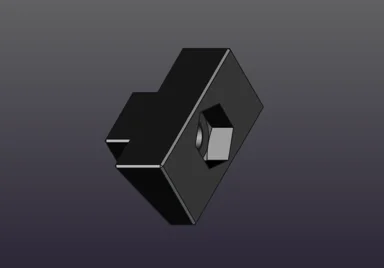
The AK platform has always rewarded tinkerers who refuse to pay premium prices for what amounts to a threaded fastener, and this printable grip nut is the latest reminder that the real cost of ownership often hides in the small parts. Instead of dropping eleven bucks plus shipping on a factory nut and screw, builders can now drop four grams of glass-filled nylon into a printer, seat an off-the-shelf M6 jam nut, and walk away with a functional, field-repairable solution in under half an hour. That shift from “buy the part” to “print the interface” is quietly rewriting the economics of keeping an AK running, especially when every extra dollar spent on hardware is a dollar not spent on training or magazines.
What makes the design clever is how deliberately it stays within the bounds of everyday tools and materials while still delivering a secure, low-profile lockup. By orienting the nut pocket flat on the bed and relying on 100 % infill PA6-GF or CF, the part gains enough compressive strength to survive repeated grip changes without supports or post-machining beyond a quick sand. The finishing step—pressing the jam nut home while the print is still warm—turns a simple plastic shell into a hybrid metal-polymer anchor that can be swapped in minutes if it ever takes damage. In an era when regulators eye 3D-printed firearms with suspicion, this kind of modular, non-fire-control accessory demonstrates that the technology’s most immediate impact is lowering barriers to maintenance rather than enabling new threats.
For the broader Second Amendment community the lesson is straightforward: every printable interface that replaces a scarce or overpriced OEM component increases resilience. When supply chains tighten or vendors decide certain parts are no longer worth stocking, the ability to fabricate a grip nut from filament and a hardware-store nut keeps rifles in the fight. It also lowers the intimidation factor for new builders who might otherwise delay upgrades because of small-part pricing. In short, the grip nut is less about one clever STL and more about normalizing the idea that an AK’s longevity should depend on skill and filament, not on the whims of importers or distributors.


