

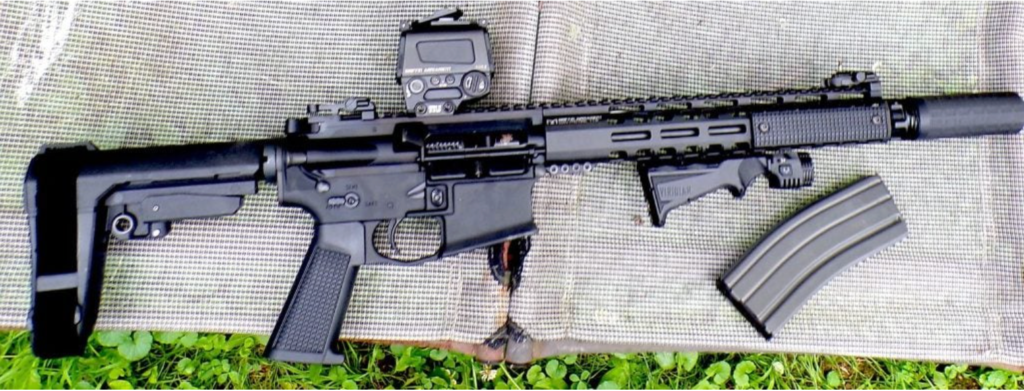
Griffin Armament’s Mk 2 isn’t just another compact AR pistol—it’s a deliberate evolution in how manufacturers are answering the demand for short, suppressor-ready platforms that still deliver full rifle performance. By pairing a 12.5-inch .223 Wylde barrel with fully ambidextrous controls and internals optimized for suppressed fire, Griffin has created a package that sidesteps the traditional trade-offs between size, weight, and reliability. The inclusion of their lightweight HRT5K suppressor from the outset signals a shift away from treating suppressors as aftermarket accessories and toward designing firearms around them, a trend that reflects both technological maturity and a growing recognition that sound reduction is a core feature rather than an optional upgrade.
For the 2A community, this matters because it demonstrates how private industry continues to innovate within the existing regulatory framework, turning legal constraints into design opportunities. The Mk 2’s emphasis on ambidextrous ergonomics and suppressor integration shows that manufacturers are listening to end-users who want pistols that function as primary defensive or training tools rather than range novelties. In an era when pistol braces face ongoing scrutiny and short-barreled rifles remain heavily regulated, platforms like this expand the practical options available to law-abiding citizens without requiring new legislation or court victories.
The broader implication is that the right to keep and bear arms is being exercised not just through litigation or legislation, but through the steady refinement of products that make ownership more accessible and effective. Griffin’s approach—building a pistol that ships suppressor-ready and runs reliably in that configuration—reinforces the idea that the market, not the government, is best positioned to determine what configurations best serve individual self-defense needs. As more companies follow this model, the community gains both better tools and stronger evidence that the Second Amendment remains a living, functional right rather than a historical artifact.


