

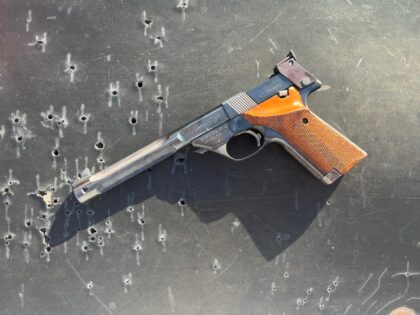
There’s something quietly powerful about a .22 LR that’s been passed down like a family heirloom rather than a tactical accessory, and the High Standard Supermatic Trophy embodies that legacy in steel and walnut. Built during an era when American manufacturers still chased Olympic-level precision in rimfire pistols, the Supermatic’s crisp trigger, micro-adjustable sights, and slab-sided barrel delivered match-grade accuracy without the modern obsession with rail systems or polymer frames. When a grandfather’s hands first wrapped around that Trophy, the gun wasn’t just a plinker—it was a statement that marksmanship mattered, that a well-made American firearm could outlast both its owner and the political storms swirling around gun ownership.
For the 2A community, stories like this cut through the noise of magazine bans and “assault weapon” rhetoric by reminding us that rights are exercised in living rooms and backyards long before they’re debated in courtrooms. This particular pistol has already survived generational hand-offs without a single Form 4473, proving that private transfers among law-abiding family members remain one of the most natural expressions of the Second Amendment. Its continued presence in the grandson’s safe also underscores a deeper cultural point: when we treat firearms as disposable commodities rather than heirlooms, we erode the very traditions that make gun ownership a lived inheritance instead of a government-granted privilege.
Ultimately, the Supermatic Trophy isn’t merely a collectible; it’s evidence that the right to keep and bear arms is most secure when it’s woven into family memory rather than dependent on the latest interpretation from the bench. Every time that pistol cycles another .22 LR downrange, it quietly rebuts the narrative that guns are only threats or nuisances; they can also be bridges across decades, carrying values of responsibility, craftsmanship, and quiet defiance against those who would sever that chain.


