

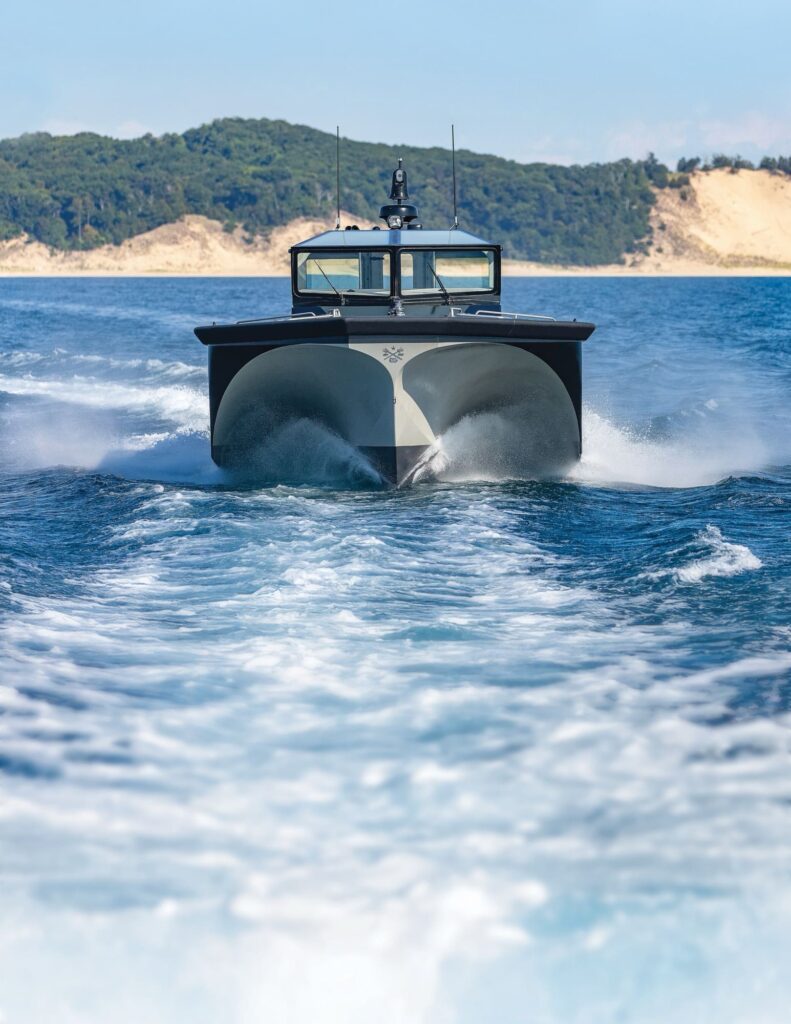
Ghostworks’ new MRLN system, built in partnership with General Atomics and Mercury Marine, turns a single fast hull into a floating Swiss-army knife that can shift from ISR to strike to logistics without slowing down or shedding payload. That matters because the same modular mast, power plant, and weapons architecture that lets a littoral vessel launch loitering munitions or small UAVs can also accept civilian-legal remote sensors, comms relays, or even non-lethal deterrent systems—exactly the kind of dual-use thinking that keeps small-boat builders in business when defense dollars ebb and flow. For the 2A community the takeaway is straightforward: every time a defense contractor proves it can bolt advanced remote nodes onto a commercial-grade platform, it validates the same open-architecture, aftermarket modularity that private citizens already use on their own vessels and vehicles to stay ahead of regulatory creep.
The real story isn’t the headline-grabbing “multirole” label; it’s the quiet admission that speed, range, and payload no longer have to be sacrificed for mission flexibility. That engineering reality trickles down to recreational and security-minded boat owners who want to add FLIR, encrypted radios, or even stabilized weapon mounts without buying an entirely new platform every time the mission changes. In an era when coastal states keep floating new restrictions on magazine capacity, optics, and even hull color, the ability to reconfigure rather than replace is a practical form of resistance. Ghostworks just proved the concept at scale; the 2A crowd should be taking notes on how to apply the same philosophy closer to home.


