

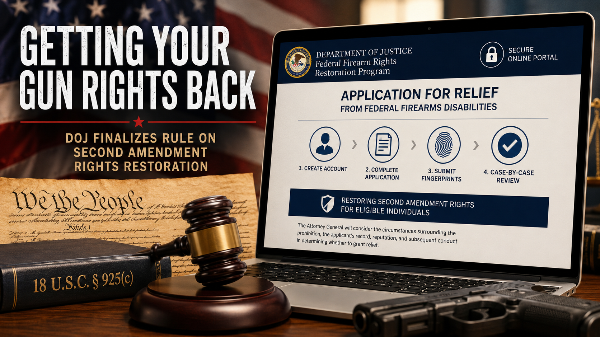
The restoration of gun rights after a felony conviction is one of the most misunderstood—and most important—frontiers in the modern Second Amendment landscape. While the Supreme Court’s Bruen decision has rightly shifted the focus to historical tradition, the practical reality for millions of Americans remains tangled in a patchwork of state laws, federal prohibitions, and bureaucratic hurdles that often feel designed to keep people disarmed long after they’ve paid their debt to society. The recent wave of state-level reforms, from automatic restoration after a waiting period to streamlined expungement processes, isn’t just about individual redemption; it’s a direct challenge to the idea that a single mistake should permanently sever a citizen’s constitutional protections. These changes force us to confront an uncomfortable truth: the current system often punishes poverty and poor legal representation as much as it punishes actual wrongdoing, creating a permanent underclass of second-class citizens who can’t defend themselves or their families.
What makes these restoration efforts particularly significant is how they expose the tension between federal overreach and state sovereignty in the post-Bruen era. When states like Virginia or Arizona create pathways for rights restoration that don’t require a presidential pardon or years of expensive litigation, they’re essentially conducting real-world experiments in how the Second Amendment should function in a free society. The data emerging from these states is telling—recidivism rates among those who regain their rights are often lower than the general population, suggesting that responsible gun ownership and rehabilitation aren’t mutually exclusive. This directly undermines the narrative that gun rights restoration is somehow a public safety risk, and it provides ammunition for the broader argument that the shall-issue, shall-restore framework is more consistent with American tradition than the current may-issue, may-restore approach.
For the 2A community, these developments represent both opportunity and warning. The opportunity lies in building coalitions with criminal justice reform advocates who may not share our views on guns but understand that permanent civil death penalties are incompatible with a free society. The warning is that without aggressive advocacy, the gains made at the state level could be undermined by federal agencies that continue to interpret prohibitions broadly and restoration narrowly. The path forward requires recognizing that gun rights restoration isn’t a loophole to be closed—it’s a feature of a system that believes in second chances and the fundamental right of self-defense, regardless of past mistakes.


