

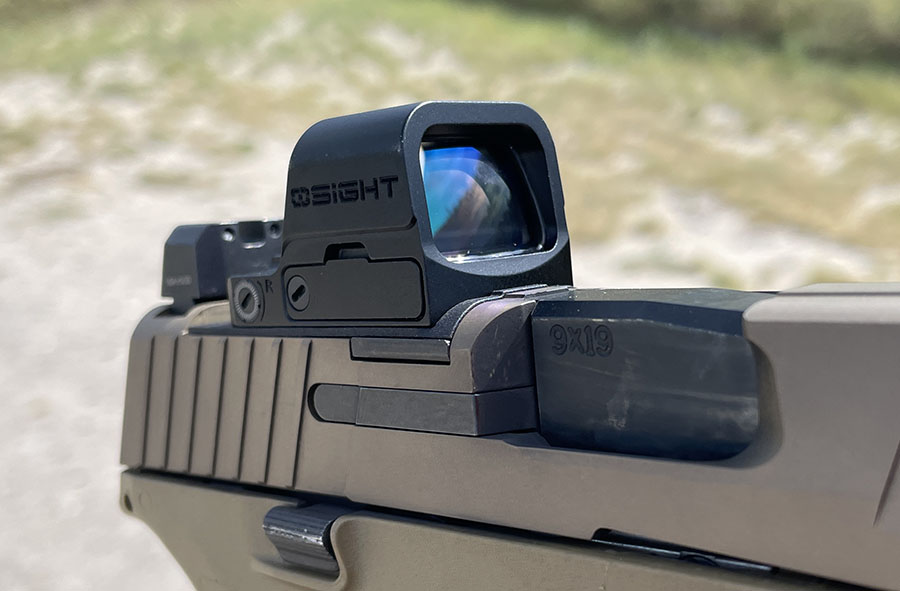
Osight’s new K GN 6 MOA green-dot optic lands at a moment when red-dot sights have moved from “nice-to-have” to baseline equipment for both defensive pistols and competition guns. By swapping the traditional red emitter for a 6-MOA green one, Olight’s optics arm is betting that shooters will trade a little extra battery draw for faster target acquisition in bright daylight and under night-vision, where green tends to pop against foliage or urban clutter. The compact footprint mirrors the popular RMSc footprint, so the optic drops onto today’s micro-compact 9 mms without milling adapters or custom plates—an immediate win for the growing number of concealed-carry owners who want an optic but refuse to carry a full-size slide.
What makes the release noteworthy for the 2A community is less the emitter color and more the pricing and distribution strategy. Olight has leveraged its existing flashlight supply chain to keep the street price competitive with established players while promising multi-year battery life and motion-activated shake-awake. If the durability claims hold up under real-world holster wear and thousands of rounds, the K GN could accelerate the already rapid normalization of optics on everyday carry guns. That normalization matters: an optic doesn’t just speed up aimed fire; it also gives new and older shooters a clearer sight picture, lowering the barrier to competent self-defense training and reinforcing the argument that modern defensive tools are safer and more precise than the iron-sight status quo.
Still, the larger implication is cultural. Every time a mainstream accessory maker ships a quality, sub-$300 green-dot that fits a stock concealed-carry pistol, the practical case for “optic-ready” pistols becomes harder to dismiss. Lawmakers and legacy manufacturers watching the aftermarket will see demand data, not theory, and that data continues to show Americans choosing tools that enhance accuracy and accountability rather than relying on outdated restrictions framed around 20th-century sight technology.


