

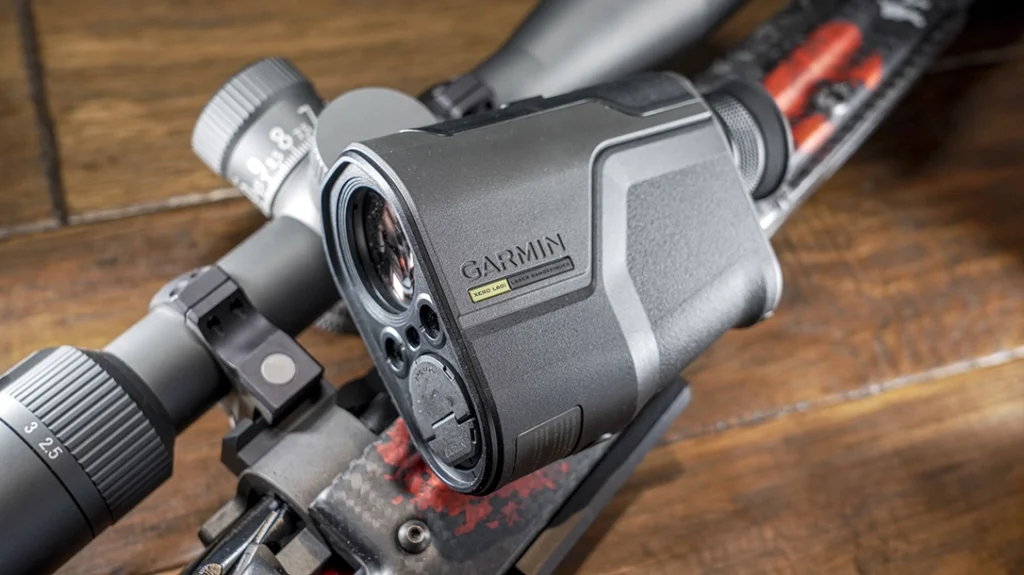
The Garmin Xero L60i isn’t just another rangefinder with a bigger screen—it’s a compact ballistic computer that collapses the gap between spotting a target and making an ethical, first-round hit. Where older units forced shooters to memorize dope cards or toggle through menus mid-shot, the L60i pulls live environmental data, pairs it with your rifle’s profile, and spits out an adjusted hold in under a second. For the 2A community that values speed and precision under stress, that workflow matters: it turns a 600-yard coyote shot from a math problem into a repeatable process that keeps the focus on safety and shot placement rather than arithmetic.
What sets this unit apart is how unapologetically it leans into connectivity without forcing shooters into a subscription trap or cloud dependency. Onboard Applied Ballistics Elite means the L60i carries its own full library of drag models and can sync directly with Garmin watches or in-scope displays, giving hunters and competitors the same data ecosystem without handing their shot data to third parties. In an era when some optics makers flirt with usage-based restrictions or remote kill switches, the L60i’s local processing is a quiet but meaningful win for privacy-conscious owners who see their gear as tools, not telemetry devices.
For the broader 2A culture, the L60i signals that the aftermarket is finally treating civilian marksmen like the serious end-users they are. Instead of dumbing down features to avoid “military-grade” optics stigma, Garmin is shipping a civilian-legal device that matches or exceeds what many LE and military units field. That arms the individual with capabilities once reserved for funded agencies, reinforcing the principle that accurate, data-driven shooting isn’t a privilege—it’s a skill set the law-abiding public has every right to master and maintain.


