

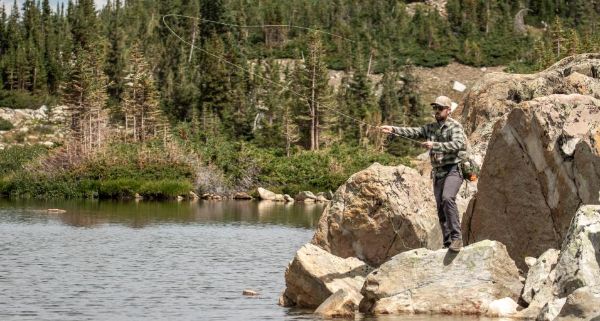
Wyoming’s Game and Fish Department is asking anglers to quit fishing after noon because the water is too warm for trout to survive the stress of catch-and-release. That sounds like a minor conservation tweak, but it’s a textbook example of how government agencies use “voluntary” guidelines to shape behavior without passing new laws. The same regulatory mindset that now tells sportsmen when they can wet a line is the one that keeps trying to tell them when, where, and how they can keep and bear arms. Both policies rest on the assumption that bureaucrats know better than citizens how to manage risk on public land and water.
For the 2A community the lesson is straightforward: every new restriction framed as temporary or voluntary becomes the baseline for the next round of rules. If today’s “please don’t fish after lunch” becomes tomorrow’s “fines start at 12:01 p.m.,” the pattern is already visible in magazine limits, background-check expansions, and “ghost gun” edicts sold as safety measures. Sportsmen who shrug off angling closures as someone else’s problem are ignoring the same administrative machinery that can just as easily redefine “sensitive places” or “assault weapons” whenever the political winds shift.
The practical takeaway is to stay engaged at every level—comment on Game and Fish proposals the same way you submit testimony on gun bills—because the principle at stake is identical: individual responsibility versus centralized control. When citizens accept that only the state can decide the proper time to fish or the proper way to carry, they quietly trade a culture of stewardship and self-defense for a culture of permits and office-hour morality.


