

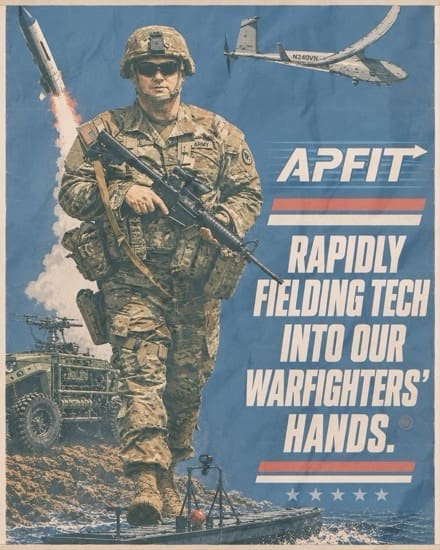
The Department of War’s latest APFIT solicitation is more than a procurement notice—it’s a live demonstration that the same acquisition agility the Pentagon now demands for hypersonics and AI can be applied to the small-arms ecosystem that underpins every infantry formation. By cutting the traditional five-to-seven-year cycle down to months, APFIT has already fielded next-generation suppressors, advanced ballistic computers, and lightweight night-vision fusion devices that directly enhance the individual rifleman’s lethality and survivability. For the 2A community, that matters: every time a program like this proves it can move faster than the bureaucracy, it undercuts the tired argument that only slow, heavily regulated government channels can be trusted with emerging small-arms technology.
Equally significant is the signal this sends to private-sector innovators who have historically viewed DoD as an impenetrable fortress of red tape. When a start-up can pitch a polymer-cased ammunition solution or a next-gen optic in January and see it in the hands of a rifle squad by summer, the incentive to design for both military and civilian markets grows exponentially. That dual-use pipeline is what ultimately trickles tomorrow’s recoil-management systems, smart optics, and suppressor tech down to lawfully armed citizens—often at lower cost and with fewer regulatory hurdles than if the same R&D were locked inside the traditional defense-industrial base.
Finally, the open FY27-31 cycle is a reminder that the Second Amendment community’s long-term security is tied to the health of the defense-industrial base itself. A military that can rapidly adopt better rifles, optics, and ammunition is a military whose small-arms requirements remain robust, keeping domestic manufacturers solvent and competitive. In an era when some lawmakers still push import bans and magazine restrictions, a procurement system that demonstrably needs continuous American innovation is one of the strongest practical arguments for protecting the very ecosystem that equips both the warfighter and the law-abiding citizen.


