

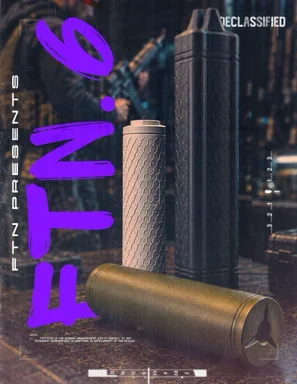
The FTN.6 pack arrives at a moment when the legal ground beneath the suppressor market is shifting beneath everyone’s feet. The North Texas ruling has carved out a narrow but real zone where covered plaintiffs and advocacy-group members can treat suppressors like any other firearm accessory, and the FTN team has responded by shrinking the rimfire can, ditching the booster on the 9 mm model, and giving the rifle versions a reinforced blast baffle plus modular muzzle devices. Those tweaks are not just engineering flexes; they’re a bet that the injunction will hold long enough for thousands of printed tubes to enter circulation before any higher court can slam the door. By keeping the FTN.4’s metal-shelled durability on the shelf for hard-use cases and pushing the lighter, quieter FTN.6 for everyone else, the designers have effectively created a two-tier ecosystem: one that survives the next regulatory reversal and one that can be printed, used, and—if necessary—melted down with a handheld torch.
What makes the release more than another CAD drop is the explicit call to action. The authors frame the lowered $0 tax stamp and the injunction as a civic duty to flood the zone with unregistered cans, betting that sheer numbers will make re-regulation politically impossible. That argument reframes the “common use” doctrine from a courtroom defense into a manufacturing strategy: every additional FTN.6 that leaves a printer becomes evidence that suppressors are ordinary, unremarkable accessories. The new textures—carbon-fiber twill, hexagon, ripple—are cosmetic flourishes, but they also serve as serial-number substitutes; each pattern is unique enough that an owner can photograph the can next to a timestamped build log, creating a de-facto paper trail without ever filing a Form 1.
For the broader 2A community the message is double-edged. On one hand, the FTN.6 lowers the barrier to entry so dramatically that a motivated hobbyist can field a hearing-safe 5.56 or 300 BLK can for roughly the price of a decent pizza. On the other, the legal safe harbor is geographically and demographically limited; anyone outside the covered classes who prints today is still staring down the original NFA penalties. The FTN team’s disclaimer is therefore not boilerplate—it is a map of the minefield. The real test will come when the first wave of these unregistered suppressors shows up at public ranges: if the devices prove reliable and the owners remain unmolested, the “common use” argument gains empirical weight; if prosecutions follow, the FTN.6 may become an expensive lesson in the difference between a district-court injunction and nationwide constitutional protection.


