

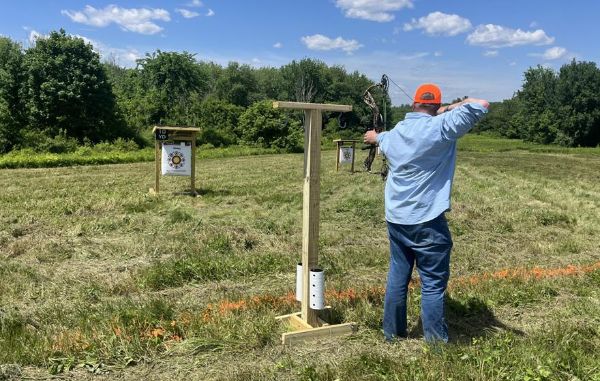
MassWildlife’s decision to roll out free Archery 101 classes and lend gear to newcomers is more than a summer recreation program—it’s a deliberate investment in the next generation of shooters who will one day transition from 20-yard hay bales to the voting booth. By lowering the barrier to entry at eight public ranges, the agency is quietly expanding the pool of citizens who understand ballistics, practice trigger discipline, and appreciate the discipline required to place an arrow—or a bullet—where it belongs. That matters because every new archer who borrows a bow this summer is statistically more likely to become a lifelong hunter, competitor, or concealed-carry practitioner, all demographics that strengthen the broader right-to-keep-and-bear-arms coalition when legislation is debated.
The timing is equally strategic. As traditional gun ranges face capacity crunches and occasional political headwinds, archery offers an adjacent gateway that sidesteps much of the cultural friction while still teaching core marksmanship fundamentals. Families who might hesitate at the sound of rapid fire often feel comfortable at an archery lane; once there, they discover that safety rules, sight alignment, and breath control translate directly to firearms training. In an era when anti-Second-Amendment voices frame ownership as an urban menace, programs like these quietly demonstrate that shooting sports are family-friendly, conservation-oriented, and accessible across demographics—facts that resonate when turnout matters at the polls.
Ultimately, the eight free public ranges and the borrowed equipment represent a low-cost, high-return infrastructure play that the firearms community should watch and replicate. States that treat archery as a feeder system rather than a niche hobby will cultivate voters who already grasp the difference between a compound bow’s let-off and a semi-automatic’s rate of fire. By turning casual summer participants into informed advocates, Massachusetts is showing how public land access and skills training can function as soft power for the entire right-to-arms ecosystem—something every pro-2A organization from coast to coast would do well to study and scale.


