

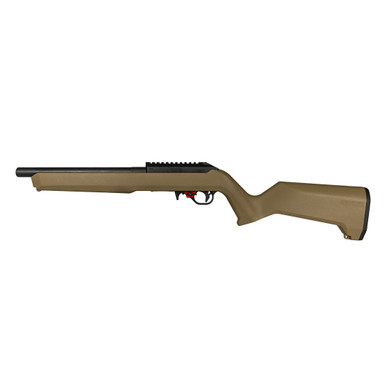
Franklin Armory’s F22-V SBR arrives as a compact, California-compliant package that still delivers the ergonomics and modularity shooters expect from a modern AR platform, proving that even in the nation’s most restrictive state a determined manufacturer can thread the regulatory needle without surrendering performance. By leveraging its dual-state footprint, the company sidesteps some of the most onerous transfer and serialization rules that hobble out-of-state competitors, giving Golden State residents a factory-supported short-barreled rifle that doesn’t require the usual NFA paperwork dance. That matters because it quietly expands the Overton window: every legal SBR that reaches civilian hands in California demonstrates that “assault weapon” restrictions and barrel-length bans are policy choices, not immutable facts, and it supplies fresh evidence for litigation aimed at restoring constitutional carry rights.
For the broader Second Amendment community the rifle is both product and proof-of-concept. Its existence underscores how interstate manufacturing strategies and aggressive state-level compliance work can blunt the impact of ever-shifting local edicts, while simultaneously furnishing new test cases for federal courts increasingly skeptical of interest-balancing tests. In practical terms, owners gain a maneuverable defensive or competition carbine that fits the same magazines, optics, and training regimens as full-size rifles, lowering the barrier for new or smaller-statured shooters who might otherwise default to less capable platforms. The message to legislators and activists is equally clear: when a boutique maker in California and Nevada can lawfully sell an SBR to the public, the narrative that “common use” excludes short-barreled rifles collapses under its own weight.


