

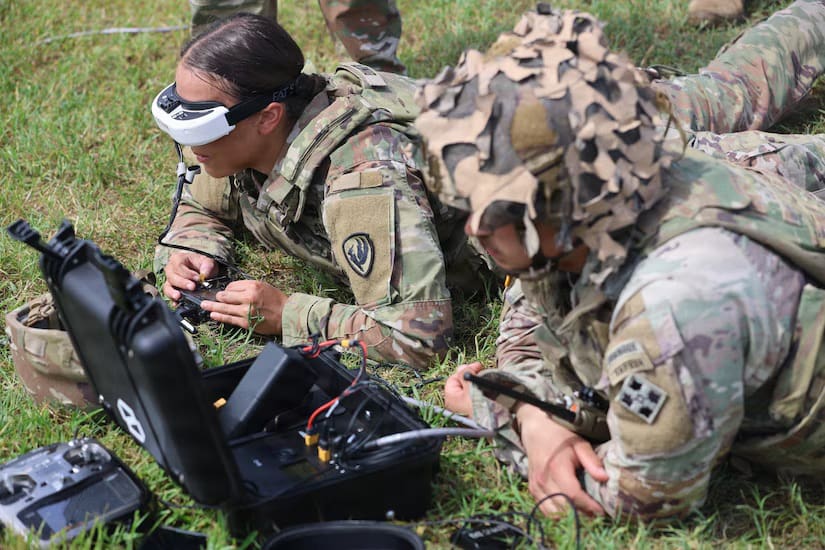
The Army’s decision to expand its Unmanned Advanced Lethality Course at Fort Rucker is more than a training update—it’s a signal that the battlefield of the future will be dominated by small, agile, armed drones operated by soldiers who understand both the technology and the rules of engagement. By sharpening the skills of those who will deploy these systems, the military is acknowledging that drone proficiency is now as critical as marksmanship once was. For the 2A community, this development underscores a broader truth: the same technologies that give the state an edge in combat are increasingly accessible to civilians, and the legal right to keep and bear arms extends to the tools of tomorrow just as it did to the muskets of 1791.
What makes this course noteworthy is its emphasis on “advanced lethality,” a phrase that hints at more than basic flight instruction. Soldiers are being trained not only to pilot drones but to integrate them into combined-arms tactics, using real-time aerial intelligence to direct fires with precision. This mirrors the civilian trend of pairing drones with ground-based optics and communications gear for hunting, property security, and emergency response. The Army’s investment in these capabilities validates the civilian market’s trajectory: as drone technology matures, the line between “military-grade” and “commercially available” continues to blur, reinforcing the argument that an armed populace equipped with modern tools remains a credible check on centralized power.
Critics who claim that civilians have no legitimate use for such systems ignore both history and current events. Just as semi-automatic rifles transitioned from military issue to household defense, armed drones are following the same path. The Fort Rucker initiative should prompt 2A advocates to push for clear statutory protections that keep these platforms in private hands, free from arbitrary restrictions that would disarm law-abiding citizens while leaving criminals and state actors unhindered. In short, the Army is preparing for a drone-centric future; the Second Amendment community must ensure that future includes an armed citizenry, not just an armed government.


