

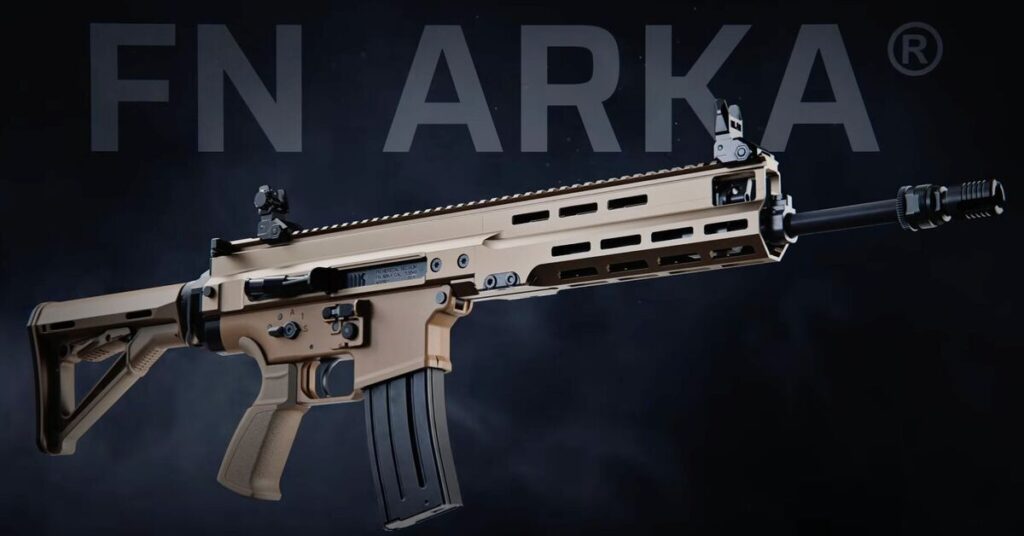
FN’s decision to fuse the battle-proven short-stroke piston of the SCAR with the familiar controls and modularity of the AR platform isn’t just a marketing stunt—it’s a calculated response to the way modern militaries actually fight. The ARKA’s hybrid DNA promises the reliability soldiers demand in sand, mud, and sub-zero conditions without forcing them to relearn an entirely new manual of arms, a detail that matters when units rotate through different rifle systems every few years. For the U.S. civilian market, that same DNA could translate into a semi-automatic variant whose aftermarket ecosystem already exists, potentially giving shooters a piston-driven option that still accepts every Magpul stock, Geissele trigger, and ACOG mount already sitting in their parts bins.
The timing of the debut at EUROSATORY is equally telling. European armies are quietly re-equipping after watching the war in Ukraine expose the limits of legacy 5.56 rifles in sustained, high-round-count fights; FN is positioning the ARKA as the rifle that bridges the gap between legacy fleets and whatever the next NATO standard might be. If the design proves durable and accurate enough to win foreign contracts, economies of scale could eventually push a civilian-legal version stateside—exactly the kind of market pressure that keeps politicians wary of magazine bans or feature restrictions. In other words, every time a major manufacturer invests in a new service rifle, the 2A community gains another data point proving that modern, reliable firearms are still being engineered for professionals who need them to go bang every single time.
The deeper implication is philosophical as much as mechanical: FN is acknowledging that the AR platform’s ergonomics won the popularity contest even among engineers who spent decades championing their own operating systems. That tacit admission strengthens the argument that America’s most popular rifle isn’t a toy or a loophole—it’s the logical endpoint of decades of real-world feedback from people whose lives depend on the gun working. When the world’s premier small-arms house validates that design language on an international stage, it undercuts the narrative that “assault weapons” are somehow exotic or unnecessary; instead, they look like the sensible, continually refined tools they’ve always been.


