

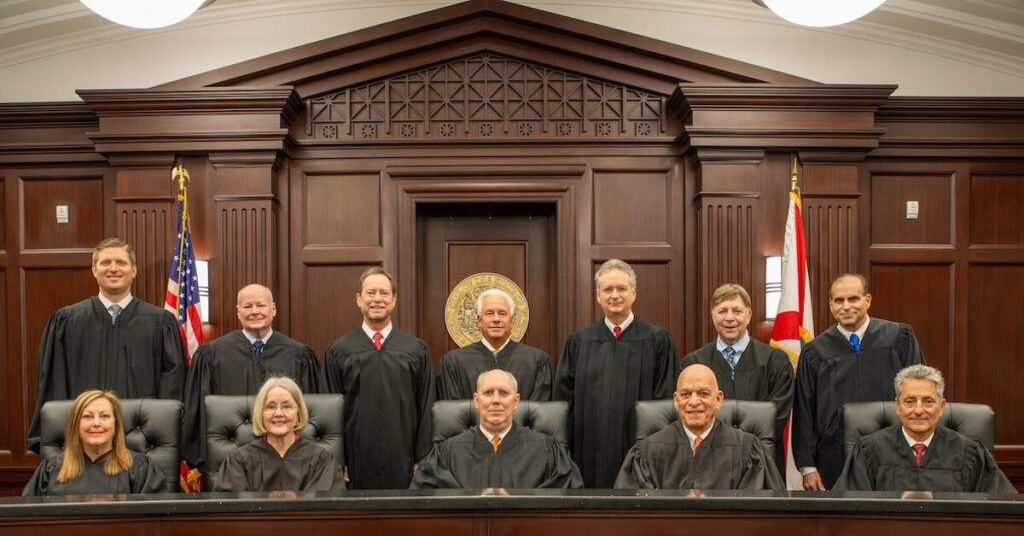
Florida’s Fourth District Court of Appeal just handed the Second Amendment a decisive win by striking down the state’s ban on concealed-carry permits for 18-to-20-year-olds, and the ripple effects will be felt far beyond the Sunshine State. In Eubanks v. State the court held that Florida Statute 790.06(2)(b) is facially unconstitutional, recognizing that the right to bear arms is not a junior-varsity freedom that magically appears on someone’s twenty-first birthday. The decision aligns Florida with the post-Bruen reality that age-based restrictions must be justified by historical analogues, not modern paternalism, and it exposes how many “public-safety” arguments crumble when courts actually demand evidence instead of assumptions.
For the broader 2A community this ruling is both validation and a blueprint. It shows that incremental challenges—filed by young adults willing to litigate—can dismantle the patchwork of age restrictions that still linger in roughly a dozen states, and it signals to attorneys general that reflexive defenses of these laws are increasingly untenable. More importantly, the opinion underscores that constitutional rights attach at the age of majority; once an 18-year-old can vote, sign contracts, and serve in the military, the notion that the same citizen is too dangerous to carry a firearm in public collapses under its own illogic. Expect copycat suits in remaining restrictive jurisdictions and renewed legislative pushes to conform state permitting schemes to the Bruen test rather than to outdated notions of youthful recklessness.
The practical takeaway is straightforward: Florida’s young adults now enjoy the same presumptive right to self-defense as their older peers, and the rest of the country just received another data point proving that shall-issue permitting regimes do not produce bloodbaths. As challenges continue to chip away at the remaining barriers, the message to legislators is clear—age is not a constitutionally sufficient proxy for dangerousness, and courts are increasingly unwilling to pretend otherwise.


