

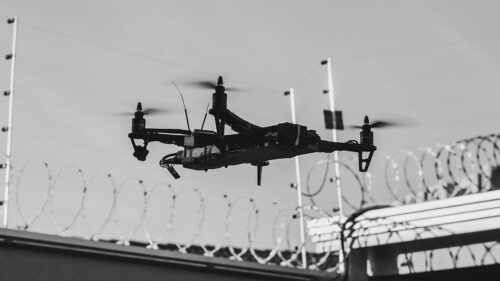
Flock Safety’s new $300-million drone fleet is being sold as a “force multiplier” for police, but the real product is a persistent aerial sensor grid that can read plates, stream thermal video, and auto-launch on gunshot detection. Where fixed cameras only watch intersections, these rotor-wing units can orbit a neighborhood for hours, cross-reference every plate they see against hot lists, and hand live video to dispatchers before officers even roll up. The company’s pitch—that the drones only fly when “triggered”—ignores the fact that the triggers themselves are expanding: a backfire, a car door slam, or an algorithm that mistakes a phone for a pistol can put a thermal eye in the sky within seconds.
For the 2A community the concern is not simply “more cameras”; it is the fusion of ubiquitous surveillance with discretionary enforcement. A drone that can read a bumper sticker from 400 feet can also log every range trip, every trip to the gun store, and every vehicle in the parking lot of a gun show. When that data is merged with Flock’s existing plate-reader map and sold or shared with federal agencies, the result is a de-facto registry of who owns what, where they drive, and how often they train—without a single warrant. Pro-2A advocates have already seen local agencies quietly turn license-plate data over to ATF tracing centers; adding an airborne sensor that never blinks simply scales the same risk from the street to the sky.
The policy response is straightforward: demand statutory limits on drone deployment, require judicial sign-off for any persistent surveillance, and insist that aerial footage be deleted within a fixed window unless it is evidence in an open case. Without those guardrails, the “always-on” grid Flock is building will not just watch crime—it will watch lawful gun owners doing lawful things, and the recordings will outlive the officers, the company, and possibly the Constitution’s Fourth Amendment itself.


