

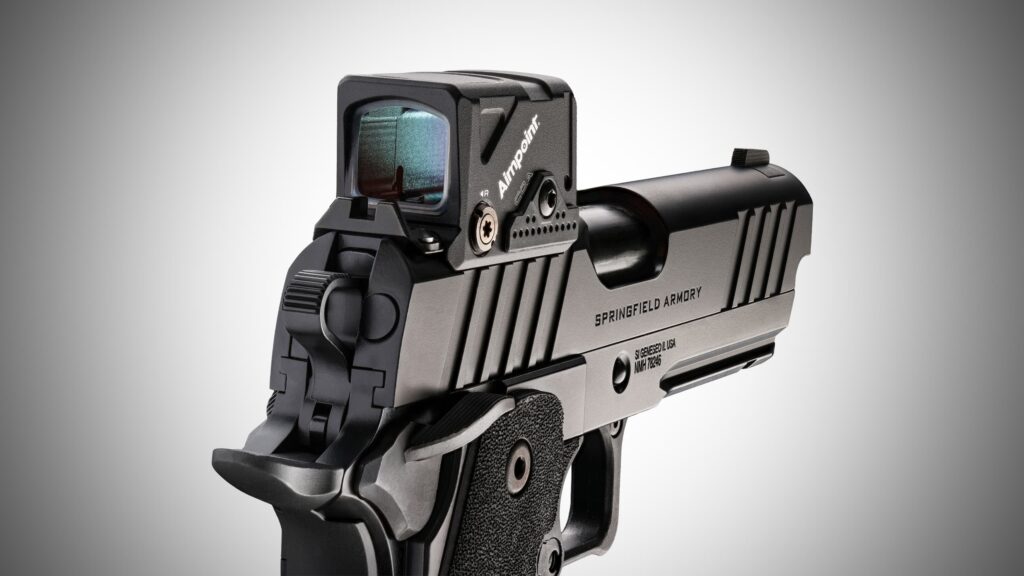
Springfield Armory’s decision to roll out COA-equipped versions of both the Prodigy and its classic 1911 line isn’t just a product update—it’s a deliberate bridge between two eras of American handgun design. By threading the optic-ready future onto frames that enthusiasts already trust for duty, carry, and competition, the company is acknowledging that red-dot pistols have moved from niche experiment to mainstream expectation. The timing matters: with more states expanding constitutional carry and training standards rising, shooters want faster target acquisition without surrendering the crisp single-action trigger feel that made the 1911 an icon.
What stands out is how this move quietly strengthens the 2A argument that lawful gun owners are early adopters of defensive technology rather than relics clinging to iron sights. An optic doesn’t merely shrink groups on paper; it extends the practical accuracy window for aging eyes, smaller-statured shooters, and anyone forced to engage under stress or low light. By offering the same COA treatment across both a modern double-stack 9 mm and heritage 1911 variants, Springfield is signaling that rights don’t come with an expiration date tied to manufacturing year or caliber preference.
For the broader community, the implication is clear: manufacturers who ignore the optic revolution risk ceding ground to companies willing to meet demand. That competition ultimately benefits every law-abiding owner by driving down prices, improving holster ecosystems, and normalizing the idea that a well-equipped citizen is simply exercising the same technological edge the Constitution was written to protect.


