

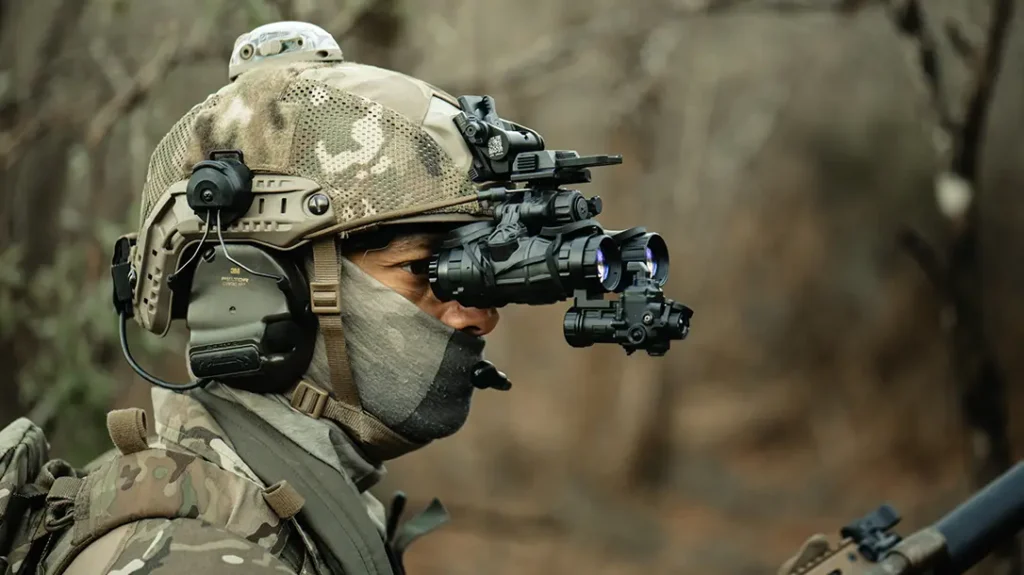
The eTAD from Safran Electronics & Defense isn’t just another thermal clip-on—it’s a signal that the commercial market is about to get squeezed by technology that was, until recently, locked behind military export controls. By shrinking high-performance cooled or high-sensitivity uncooled cores into a clip-on package that maintains zero and holds boresight across repeated detachments, Safran is effectively compressing the performance gap between what a soldier can mount at 0200 and what a civilian can bolt onto an AR-10 or bolt gun for a nocturnal hog eradication run. That compression matters because every incremental improvement in NETD, recognition range, and battery endurance that reaches the civilian channel raises the floor for what “good enough” looks like in the night-hunting and property-protection space.
For the 2A community the real story isn’t the spec sheet; it’s the precedent. When a NATO-tier defense contractor starts marketing a device whose core architecture was funded by defense budgets, it usually means the underlying sensor technology has either aged out of classification or the company has secured the necessary Commerce and State Department licenses to sell a de-rated version. Either path accelerates the trickle-down effect we’ve seen with Gen-3 tubes, high-end LRFs, and ballistic solvers. The eTAD’s implied ability to ride on existing day optics without dedicated rail real estate also lowers the logistical and financial barrier that has kept many shooters from running thermals at all—especially in states where the hardware itself is still legal but the price has been the practical prohibition.
Longer term, this kind of product pressures both regulators and legislators. If a civilian can achieve 90 % of a military recognition capability for the cost of a decent LPVO plus mount, arguments that rest on “these are only for the battlefield” start to ring hollow. That doesn’t mean a ban is impossible—history shows rights can be lost incrementally—but it does mean the technological baseline for self-defense and land management just ratcheted upward again, and the industry’s ability to normalize that baseline with each new release makes future restrictions more politically expensive to enact.


